


Magazine Archive
Home -> Magazines -> Issues -> Articles in this issue -> View
Gateway Sound Studio | |
Article from Electronics & Music Maker, April 1983 | |
Audio engineer's training course

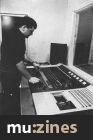
Dave Ward lecturing at Gateway.
It is now nearly a decade since the TEAC Corporation unleashed on the awaiting music business the first 4-track tape recorders for use outside the professional studio. This caused a revolution in the recording industry, the repercussions of which still exist today. In the space of a few years we have seen 8 tracks on ½" tape, 16 tracks on 1" tape, 4-track portable cassette recorders and now the 8-track personal recorder that uses ¼" tape and sits on your average dining room trolley.
From the start of the 'Great Recording Revolution' several books and countless articles have been written about multi-track techniques... many of them highly informative. But no amount of reading and burning the midnight Anglepoise can replace personal instruction, particularly that which results from several years experience in the recording business.
The staff of Gateway Studio in London have now made this knowledge available to home recordists' and musicians wanting to learn the tricks and techniques used in the professional studio. A comfortable upper part of the studio has been turned into a classroom, equipped with a Fostex 8-track set-up (with the help of Bandive, the importers). Courses run for four days (or evenings) and are organised weekly.
Dave Ward, who takes the courses, has found from the experience of running courses in arts centres that a great deal of information can be passed on in concentrated sessions and still leave time to answer and discuss all those 'niggling' doubts and questions that one finds in the jargon-filled jungle of professional recording.
Since the courses started in September, over forty people have passed through Gateway's doors, armed now with new thoughts, clearer minds and itching fingers. Dave says that in the first courses he uncovered all manner of indescribable misconceptions, probably picked up from some 'tired and emotional' engineer late at night.
Straight away it was decided that the courses had to start right at basics, assuming no previous knowledge. In this way the sound path or programme could be traced and explained along its perilous journey from microphone to loudspeaker. Included in this unravelling process are the mysteries of impedance matching, sound wave theory, the uses of EQ (tone controls), and techniques that are particularly suited to those recording at home (natural bathroom reverb, for instance).
It is clear that the use of sophisticated technology is expanding the possibilities within the music business month by month. But as Dave Ward says, what is not so obvious is the need for people involved in the music business to keep up with the technology. Not just the musicians, but also A & R department personnel, community project people, school music departments and audio-visual enthusiasts.
With all these and many other groups in mind, Gateway plan further courses and seminars in many subjects at many levels. Enquiries and suggestions should be addressed to Gateway Studio, (Contact Details).
More with this topic
 Training and Education - For Recording Engineering |
 CAMI - Pitch Training On The BBC Micro (Part 1) |
 New Music - Electronics at East Anglia |
 Nine to Five Man |
 Making It With Multitrack |
 Enterprise zone - Newham College |
 Recording Routes |
 The School of Audio Engineering |
 Electro-Acoustic Music at Huddersfield |
 W.A.P. - The tuition course that breaks the barriers |
 At School in the Studio |
 Baptism of fire - Alchemea |
Browse by Topic:
Education
Publisher: Electronics & Music Maker - Music Maker Publications (UK), Future Publishing.
The current copyright owner/s of this content may differ from the originally published copyright notice.
More details on copyright ownership...

Electronics & Music Maker - Apr 1983
Feature
Previous article in this issue:
Next article in this issue:
Help Support The Things You Love
mu:zines is the result of thousands of hours of effort, and will require many thousands more going forward to reach our goals of getting all this content online.
If you value this resource, you can support this project - it really helps!
Donations for June 2026
Issues donated this month: 0
New issues that have been donated or scanned for us this month.
Funds donated this month: £0.00
All donations and support are gratefully appreciated - thank you.
Magazines Needed - Can You Help?
Do you have any of these magazine issues?
If so, and you can donate, lend or scan them to help complete our archive, please get in touch via the Contribute page - thanks!
Please Contribute to mu:zines by supplying magazines, scanning or donating funds. Thanks!
Monetary donations go towards site running costs, and the occasional coffee for me if there's anything left over!

 @mu_zines
 RSS Feed
 Blog
Blog