Behind the Scenes
(HSR May 87)


Magazine Archive
Home -> Magazines -> Issues -> Articles in this issue -> View
New Lords Of The Manor | |
Studio: Great Linford Manor | Paul WardArticle from Sound Engineer and Producer, June 1987 | |
Stately home turned upmarket residential studio. Chris Maillard sees history repeating itself
Corners are more likely to be neatly finished than carelessly cut at Great Linford Manor near Milton Keynes. Owner Harry Maloney and Technical Manager Paul Ward talked to Chris Maillard
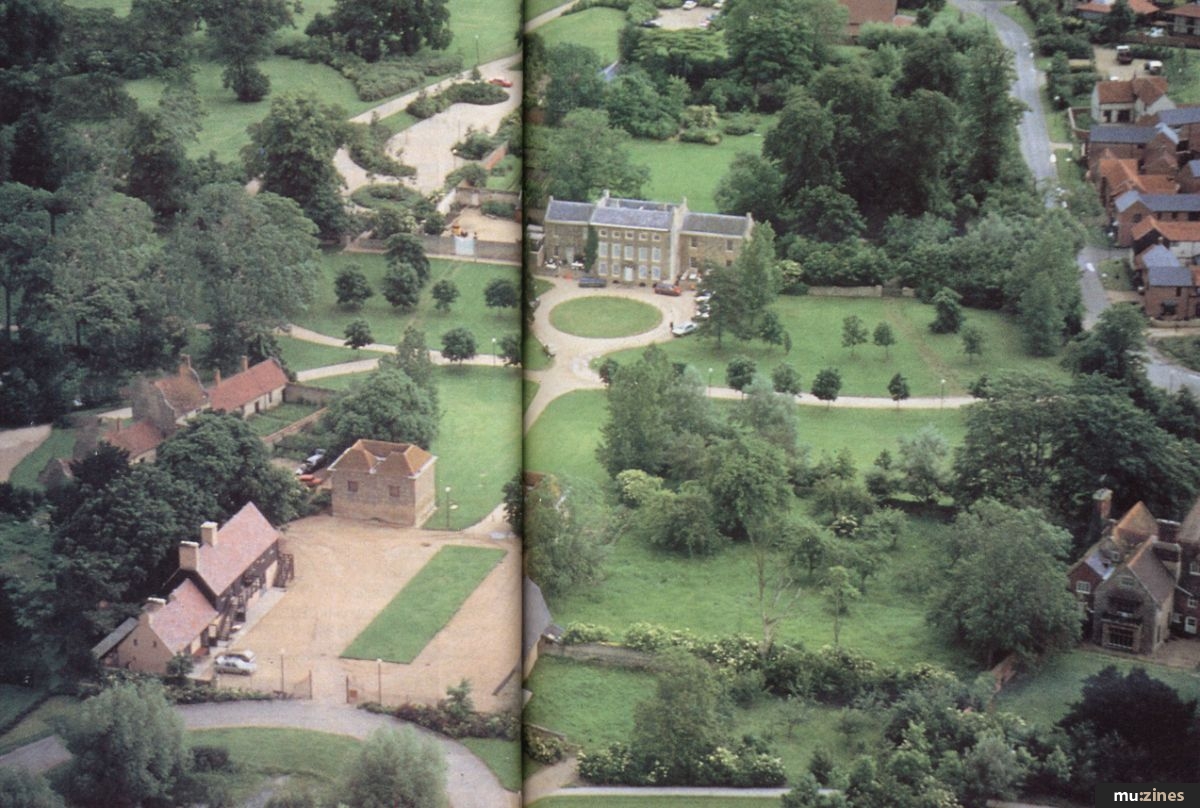
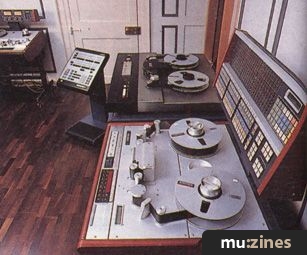
Good manors: stately surroundings reflect the interior grandeur of the machine room, studio and control room
It's a funny thing, history. In the 17th Century, the ballroom at Great Linford Manor must have played host to many gatherings of the most fashionable people of the time with their elaborate hairstyles, satin and lace clothes and complicated dances.
The great ballroom is again the venue for gatherings of fashionable people with distinctive dress and hairstyles, satin and lace clothes and complicated dances. Pop stars. Only the conversation appears to have changed. Discussions on what the duchess said to her beau has been replaced by such delicacies as 'Oi, Gaz, can we 'ave a bit more top on the bleedin' guitar?!?'
Yes, stately old Great Linford Manor is now a recording studio. As befits a country house, however, it is a better class of studio; with its 48-channel SSL desk and choice of Studer A820 analogue or Mitsubishi X-850 digital multitracks, you'd find it difficult to mix in better circles.
The Great Linford story so far starts with a bloke called William Pritchard and ends with a bloke called Harry Maloney.
William Pritchard was the man who bought the estate in 1676, after a fire had flattened the previous manor, and built the basis of the present house. He was a pretty big name at the time — Lord Mayor of London and five times an MP, no less. But after it had been through the usual depredations of five centuries, including much alteration by a barmy great-nephew of Pritchard's, the house was left to fall apart in less-than-tender care.
Finally it came to what many would regard as the lowest point any building can reach. It was owned by the Milton Keynes Development Board. Because it is, in fact, within the boundaries of MK — not that you'd guess except for a couple of new-looking red-tiled roofs poking their Barrett-built tops over a distant hedge.
But there was salvation in sight. When the Concrete Cow Corporation was forced to pull in its horns, the Manor was surplus to requirements, and it somehow fell within the beady gaze of the present owner, Harry Maloney.
Harry, like old Bill Pritchard, is a man well-known in his field and not short of a few quid. But he's not interested in politics, like his long-distant predecessor — that's much too dishonest for him. No, Harry's game is managing rock bands.
He's pretty good at it, too. The heavier end of the business has been his domain, with successes such as Uriah Heep, the Donington Monsters of Rock Festival and Manfred Mann's vast worldwide single hits figuring prominently on his CV.
So why should a man with such an eminent past take on the task of owning a studio, a job that all the soothsayers of doom in the pro-audio industry say is equivalent to taking a pilot's job on Kamikaze Airways?
'Well, I looked at it pretty carefully,' he said, 'and yes, the studio business has got a few problems. But they're generally in the middle of the market where there's a lot of competition and not enough money to go around. So I decided that if I was going to open a studio it would be one that was right at the top end, the absolute best.
'There will always be a demand for a product that comes close to perfection and that's as true in this business as any other. You don't see Rolls Royce Motors going bankrupt, do you?
'Plus from my point of view as a manager — and I'm getting involved in publishing and record company work these days as well — it's extremely useful to get a great studio at very favourable rates for my acts. Economically, both sides can feed off one another.'
But of course for the sort of outlay Harry Maloney has put into Great Linford Manor he's not going to use it as a sort of posh home studio. Paying clients have to come through the door regularly.
One big factor in any studio's appeal, as any personnel manager will tell you, is the people. The staff have far more effect than any amount of designer bidets or psychedelic wall-hangings. And Maloney has exercised a lot of managerial suss in that area by choosing Paul Ward as his technical manager.
Paul is a veteran of many years in the Branson organisation. Luckily he'd got one of the longer straws and instead of having to cross the Atlantic in a hot air ballon or sink beneath it in a powerboat he ended up engineering at The Manor, the original residential studio and at one time definitely one of the world's best studios.
It is of course a direct competitor to Great Linford Manor so, cunningly enough, Maloney enticed one of its best people over to his side. Not that too much persuasion was needed. Nearly a decade in the Manor's draughty halls was more than enough for Paul and he gladly took the chance to go and play with a brand new studio.
'It's nice to work in a new organisation where you know no corners have been cut and where everything is as good as it can possibly be,' enthuses Ward. 'Virgin got to be such a large concern that the Manor was left slightly out on the sidelines and you had to go through four committees to get anything done or order a bit of gear.
'Here I think we've achieved the sort of atmosphere that the Manor had when it started, that blend of comfort and friendliness, while keeping away from some of the things people always said they didn't like about it. I don't want to be too bitchy about the Manor, even though it's competition. Let's just say that we've been very careful to avoid some of their pitfalls.'
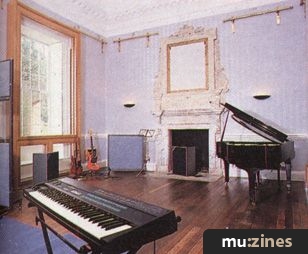
One thing that the studio has which is not up-to-the-minute and hyper-fashionable, however, is a large live room. While all and sundry are building their studios with huge control rooms and miniscule overdub booths, the Munro Associates-designed (Roger D'Arcy-designed, to be precise) Great Linford Manor boasts a ballroom-sized recording area. Funny that, anyone would think that it used to be the ballroom.
'Well, for a start we are going to work with a lot of bands who want live drums and guitars and so on,' explained Paul. 'Harry has a lot of contacts in the rock field and obviously they want that sort of sound.
'Fashions change. We intend to be around for a long time, and if we built that sort of high-tech studio and suddenly everyone wanted to put down live drums, what would we do? As it is, the control room is plenty large enough for keyboards. But we've got no restrictions if we want to do something else.
'Also, we've got a programming suite hooked up via MIDI links all over the place. That's upstairs, looking out over the main room, and if someone wants to link loads of keyboards together it's no problem where-ever they want to play them. They can even have one master in the control room linked to loads more upstairs if they want.
'Really, we've tried to make the studio as flexible as possible so we can cater for more or less anyone's requirements.'
That seems to be true. Thanks to an ingenious patchbay system and a Lynx synchroniser, any tape machine or combination of tape machines can be interlinked. If you want to record drums on analogue and vocals digitally, no problem. Likewise when someone wanted to record vocals direct from the mic, through a Focusrite EQ and on to the Mitsubishi, bypassing the desk completely, it was dead easy.
Another decidely finicky subject is accommodation. It's all very well having the best-equipped studio outside a pro-audio distributor's warehouse, but if the lead singer thinks the bed's too firm it might well jeopardise the whole project. So pains have been taken to ensure the comfort is at least four-star, and that six months spent recording an album are more like a working holiday than a prison sentence.
For a start, there's a producer's suite which is separate from the band's premises. The very sensible theory is that producers and bands often want to preserve a mutual distance in order to keep their relationship on an even keel. And when the lead guitarist bursts in waving an axe because the producer in question has just edited out his best ever solo, there are two exits from the suite, thereby avoiding nasty incidents on the stairs.
And still on the track of keeping clients happy, there is no shortage of recreation rooms and/or lounges where they can watch Death Cannibal Virgins of Doom on the video or even listen to rough mixes on one of several hi-fi systems.
And one particularly nice touch is that the domestic staff — cook, cleaners, and so on — all live off the premises and only arrive when needed.
'The whole idea of that is to make clients think that it's their place, not ours,' points out Ward. 'Nobody wants strangers wandering in and out while they're having breakfast, so we make sure all our staff are there when they're needed, but they don't get in the way otherwise.'
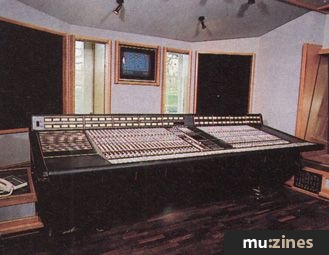
Great Linford Manor has been renovated and converted tastefully and sensitively. Things such as having to float the whole control room floor on a raft of concrete supported on rubber pads have been done without turning it into a set from Alien, and the elaborate plasterwork on the ceiling of the ballroom has been kept completely intact — not least because it makes a marvellous high frequency diffuser. The fireplace in the control room's not a bad bass trap, either.
But all that is no good without money to keep the place going. Luckily, the omens are excellent. The customers who have used the place so far have been delighted, and Swing Out Sister particularly pledged an early return.
If all goes according to plan, Great Linford Manor is due one of the most successful chapters in its 400-year history. Sir William Pritchard would be proud. In fact, I did hear that he played a mean spinet overdub...
Hit List
SWING OUT SISTER
PHONOGRAM
FUNKREW
ARISTA
POCKET ROCKETS
MCA
WHEN IN ROME
10 RECORDS
WARD BROTHERS
SIREN
CHE
SIREN
MODERN MAN
MCA MUSIC
PHONOGRAM
FUNKREW
ARISTA
POCKET ROCKETS
MCA
WHEN IN ROME
10 RECORDS
WARD BROTHERS
SIREN
CHE
SIREN
MODERN MAN
MCA MUSIC
DATA
CONSOLE
SSL 4056 48-channel console with total recall
TAPE MACHINES
1 Mitsubishi X-850 32TK digital recorder
1 Mitsubishi X-86 2TK digital recorder
1 Studer A820-24TK two-inch analogue recorder
1 Studer A820-2TK half-inch analogue recorder
1 Lynx synchroniser
3 Aiwa ADF770 cassette decks
1 Sony PCM701 ES digital processor
1 Sony SLHF 100 Betamax recorder
1 Sony CDP502ES CD player
1 technics SLJ3 linear tracking turntable
SPEAKERS
Acoustic Research AR 18
Yamaha NS10
Auratone 5C
REVERBERATION
1 AMS RMX 16 reverb
1 Lexicon PCM70 digital reverb
1 Yamaha REV7 reverb
1 EMT 140S stereo valve plate
DELAY AND EFFECTS
2 Yamaha SPX90 multi-FX processors
1 AMS DMX 1580S-harmonisers + kbd. IF.
1 Akai S900 sampler
2 Drawmer DS201 noise gates
1 Drawmer 1960 tube compressor
1 Electrospace spanner
1 BEL BF20 MK3 stereo flanger
1 Orban 622B dual parametric Eq.
1 Yamaha Q2031 2 channel Graphic Eq.
LIMITERS
2 DBX160X limiters
2 DBX163 limiters
1 UREI1178 two-channel limiter
2 UREI LA4 limiters
MICROPHONES
4 Neumann U87
2 Neumann U89
4 Neumann U47
3 Neumann KM84
2 AKG C414/P48
1 AKGD12E
2 AKG D224E
2 Beyer M69
2 Beyer M201
2 Electrovoice RE20
2 Sennheiser MD421
2 Sennheiser MD441
2 Shure SM57
2 Shure SM58
2 AKG D125
QUESTED MONITORING
SSL 4056 48-channel console with total recall
TAPE MACHINES
1 Mitsubishi X-850 32TK digital recorder
1 Mitsubishi X-86 2TK digital recorder
1 Studer A820-24TK two-inch analogue recorder
1 Studer A820-2TK half-inch analogue recorder
1 Lynx synchroniser
3 Aiwa ADF770 cassette decks
1 Sony PCM701 ES digital processor
1 Sony SLHF 100 Betamax recorder
1 Sony CDP502ES CD player
1 technics SLJ3 linear tracking turntable
SPEAKERS
Acoustic Research AR 18
Yamaha NS10
Auratone 5C
REVERBERATION
1 AMS RMX 16 reverb
1 Lexicon PCM70 digital reverb
1 Yamaha REV7 reverb
1 EMT 140S stereo valve plate
DELAY AND EFFECTS
2 Yamaha SPX90 multi-FX processors
1 AMS DMX 1580S-harmonisers + kbd. IF.
1 Akai S900 sampler
2 Drawmer DS201 noise gates
1 Drawmer 1960 tube compressor
1 Electrospace spanner
1 BEL BF20 MK3 stereo flanger
1 Orban 622B dual parametric Eq.
1 Yamaha Q2031 2 channel Graphic Eq.
LIMITERS
2 DBX160X limiters
2 DBX163 limiters
1 UREI1178 two-channel limiter
2 UREI LA4 limiters
MICROPHONES
4 Neumann U87
2 Neumann U89
4 Neumann U47
3 Neumann KM84
2 AKG C414/P48
1 AKGD12E
2 AKG D224E
2 Beyer M69
2 Beyer M201
2 Electrovoice RE20
2 Sennheiser MD421
2 Sennheiser MD441
2 Shure SM57
2 Shure SM58
2 AKG D125
QUESTED MONITORING
More on: Great Linford Manor
 |
More with this artist
Behind the Scenes (Paul Ward) |
More with this topic
 Studio Of The Month - Sarm West |
 Auntie's Playroom - BBC Radiophonic Workshop |
 In The Lede - The Tape Gallery: putting itself in the picture |
 Studio Diary |
 Studio Diary |
 Studio Diary |
 Paradise Found - Paradise Studios |
 Battery Studios - The Ever-Ready Studio Complex |
 Studio Of The Month - Studio 99 |
 Studio Of The Month - The Padded Cell |
 MIDI Futures at the BBC |
 Studio Reproduction (Part 1) |
Browse by Topic:
Recording Studios
Publisher: Sound Engineer and Producer - Media Week Ltd.
The current copyright owner/s of this content may differ from the originally published copyright notice.
More details on copyright ownership...

Sound Engineer and Producer - Jun 1987
Donated by: Chris Maund
Feature by Chris Maillard
Help Support The Things You Love
mu:zines is the result of thousands of hours of effort, and will require many thousands more going forward to reach our goals of getting all this content online.
If you value this resource, you can support this project - it really helps!
Donations for August 2026
Issues donated this month: 0
New issues that have been donated or scanned for us this month.
Funds donated this month: £0.00
All donations and support are gratefully appreciated - thank you.
Magazines Needed - Can You Help?
Do you have any of these magazine issues?
If so, and you can donate, lend or scan them to help complete our archive, please get in touch via the Contribute page - thanks!
Please Contribute to mu:zines by supplying magazines, scanning or donating funds. Thanks!
Monetary donations go towards site running costs, and the occasional coffee for me if there's anything left over!

 @mu_zines
 RSS Feed
 Blog
Blog