


Magazine Archive
Home -> Magazines -> Issues -> Articles in this issue -> View
Psychotronic Landscapes | |
Michel Huygen/Neuronium | NeuroniumArticle from Sound On Sound, June 1993 | |
This Spanish synthesist explains the working methods and motivation behind his psychotronic musical landscapes.
Catalan musician Michel Huygen is living proof that handsome rewards can be reaped from the often misconstrued world of electronic music — not to mention the Olympic City of Barcelona. Jonathan Miller reveals the art of the psychotronic entrepreneur.

If asked to define the word neuronium, one might think of metallic or gaseous substances, such as titanium or helium, or human anatomy — a neuron is the basic cell of the nervous system. In reality, Neuronium is the creation and registered trade mark of Spanish synthesizer wizard Michel Huygen, a musical project he conceived 17 years ago — so neither assumption is correct, although one is distinctly warmer than the other. During this time Michel has refined Neuronium's sound from its progressive rock inception to a stunning example of new age or electronic music at its very best in Oniria, the latest studio album to display his musicianship and expertise in digital recording and production. Technology aside, it has always been Michel's keen ear for melody that distinguishes his generally peaceful compositions from those of his contemporaries. In utilising the talents of Santi Pico, considered to be the best electric guitarist in Spain, he has succeeded in giving his music a distinctly Spanish flavour, set against a carefully woven textural backdrop of strings, choirs and 'cosmic' passages.
With a European reputation in his field arguably second only to the mighty Tangerine Dream, Michel enjoys world-wide sales extending well into six-figure territory with 22 album releases to date — not bad going, considering that electronic music has never courted mass appeal, perhaps due to a chronic lack of publicity and investment, especially true in the UK, where Michel and Neuronium remain known only to a select few. Nevertheless, a respectable number of copies of each subsequent release find their way into discerning listeners' hands and CD players, largely as a result of dedicated importers such as Lotus Records' Andi Garibaldi, who introduced Neuronium to the British public back in 1981.
Highlights to date in this long, distinguished, and successful career include an instrumental involvement in two shows about electronic music for Spain's main national television channel in 1981, on which he collaborated with innovators Vangelis and Manuel Gottsching's Ashra; being inaugurated by Her Majesty Sofia, the Queen of Spain, in 1986 to manage the Electronic Music Department of the Queen Sofia Centre in Madrid; and opening the Madrid Planetarium in 1987 with a series of sell-out concerts. Michel holds the exclusive legal rights to the title 'Barcelona 1992', a fact which will have undoubtedly boosted his bank balance in light of the recent Olympic/Paralympic Games. This dates back to 1985, when he recorded his first soundtrack for the film An Olympic Death, a thriller centering on the possibility of Barcelona as the Olympic City. The music was later released in its own right as the Michel Huygen solo album Barcelona 1992, hence the legality. The album was re-released on CD in 1992 to coincide with the Olympics and although not the official music, it sold out in Spain within a fortnight. The Paralympic Games Committee have since contacted Michel for permission to use the album's title track as the theme for a forthcoming video about the Paralympics for world-wide release. Expect to see a proliferation of Atlanta 1996 albums as inspired readers dash into studios in a bid for financial freedom!
DUY STUDIOS
Michel is a 38 year-old linguist, French being his mother tongue as a native Belgian, and fluent in Spanish as a resident since 1963. His English is an obvious asset when dealing with the complicated mechanism of the Anglo-American dominated music industry. It is therefore apt that I first had the pleasure of his company in London, where meetings with major record company executives, with a view to signing a new deal in the UK, were the primary objective behind the visit. Whilst unsuccessful, Michel's longevity in an age of increasingly disposable music surely speaks for itself. Yet it seems ironic that the British record companies have shown little interest. The UK is now one of the few countries in the world where his music is not manufactured or distributed on a regular basis.
Our second meeting took place on Michel's home ground at DUY Studios, his private recording studio complex centrally situated in Barcelona. DUY is an abbreviation for Digital Huygen and is also a music production company which specialises in television and film soundtrack work. To set the scene, numerous music awards are tastefully displayed amid ethnic musical instruments in the entrance leading to four studios, two of which adjoin a large live room and are used for recording and mixing. A third is dedicated to soundtrack production and digital mastering, with the largest sound effects library in Spain accessed by computer from five Sony CD 'jukeboxes'. The fourth is a video editing suite. Since the larger recording studio was undergoing an extensive redesign, the interview took place in the smaller one.
NEURONIUM
An obvious starting point in our conversation is a definition of that elusive word from the man himself: "It's very easy because I invented it myself! When I decided to form a group, I wanted to do very mental music and thought about something coming from the brain. I took the word neuron — the brain cell — and added 'ium', a latin ending to make it sound more scientific and serious. So Neuronium is music from the brain."
Having created a name for his musical project, Michel set about inventing psychotronic music, as mentioned on the Neuronium album sleeves. Psychotronic crops up again in the CD booklet of the re-release of Michel's first solo album, Absence Of Reality, which states: "The music of this album has been digitally processed through the exclusive Neuronium psychotronic system." I assumed this system to be Michel's mind, but his explanation of what is actually a unique device remains somewhat esoteric, although he cannot be blamed for not wanting to give the game away.
"The word psychotronic exists, although a lot of people on the street don't know about it. It's the science of trying to establish an equilibrium between the body and mind to create only positive energy and feelings. I never compose music to give bad sensations, so psychotronic music is always positive energy coming from music. During the mastering I processed the sounds through a special custom-built system. It's not like the Roland Sound Space, but gives a special sensation using subliminal alpha waves. A lot of people have told me that they love my music because it's very relaxing, but also because there is something special that sets it apart from other music and that's the psychotronic system. Big record companies in Spain often ask me to master things for them using the system, but I only use it for my own music."
STRANGE MUSIC
Michel has consistently refused to bow to commercial pressure from record companies and past colleagues. Consequently numerous recording contracts have been signed over the years, including stints with Jive and Magnum in England, in addition to setting up his own labels to record and produce music without any outside interference. He has the distinction of being the first synthesist in Spain to be the proud owner of a Minimoog and the less well-known Moog Sonic Six, an early monosynth built into a suitcase. Perhaps this contributed to the apparent ease with which he landed his first record deal.
"It was not difficult at all and really like something out of a fairy tale. In 1976 I didn't have much money so we went to a very professional studio and recorded the first Neuronium album, Quasar 2C361, in one and a half hours, including the mix. I took the tape to the EMI International office in Barcelona where the A&R Manager thought that it was very strange music but offered a contract and a very big advance, all within 24 hours! I was not the producer of the second album so I paid for my freedom and left. Only the other keyboard player, Carlos Guirao, stayed with me in the Neuronium project but left in 1982. He really enjoyed the first five years with the group but then asked me if we could do pop music in Neuronium and I told him it's not possible. I've never released anything that I don't like and I left EMI for this reason. Many labels think that it is easy to sell electronic music without promotion, and of course this is not true. Promotion is a really basic thing: If people don't know that a record exists then they will not buy it."
SOUND MANIAC
The fruits of this lengthy musical journey surround us and prompt me into asking about the advantages of having access to a recording facility of this calibre: "When you go into a commercial studio you're always worrying about the cost of recording, so I set up my first private studio in December 1984 to avoid this. I soon had a lot of soundtracks and things became very big so I moved here. I choose one of the studios to work in and have the opportunity to reproduce in music exactly what I feel without the pressure of time. We only record my music and soundtracks here but of course if good friends of mine need to record something then they can do so. I live 30 kilometres from Barcelona and also have a composition studio which is about one kilometre from my home so I walk or cycle there. I originally planned to have it in my home but thought that this could be dangerous as I'd probably never go outside! It's where I go to compose in peace and quiet because there are a lot of things going on at DUY throughout the year. I have the same basic instruments in both studios so I just carry disks between them."
Digital developments have obviously revolutionised the entire recording process and it is a medium that Michel has embraced wholeheartedly. He is in the privileged position of being able to test new equipment in the comfort of his own studio. Whilst this helps explain his choice of gear, it is also indicative of his standing in the audio industry.
"All the import companies fax the technical data of forthcoming equipment and instruments to me. The last thing that I purchased was the Roland DM80, their new 8-track digital recording system. They left it with me for three months and I discovered it was perfect. I sold a Mitsubishi digital 32-track and now record on Akai A-DAMs. For digital editing, I think ScreenSound is the best in the world now. We recently received the only two in Spain from Solid State Logic in England.
"With computers like Atari or Macintosh — we have both — and digital multitracks like the A-DAM you're able to extensively edit music. The advantage of digital recording is the superior sound quality and the fact that you can easily replace anything in a recording without having to run a track from the beginning. I'm a sound maniac and it's for this reason that I've re-released my albums on CD with new masterings trying to get the maximum quality. Absence Of Reality on CD has a new perfect digital master without noise, but it was so difficult. I wanted to keep exactly the same sound without adding any kind of new reverb. The original recording was very noisy and I used the Roland Space Echo from ten years ago."
SYNTHETIC ASPIRATIONS
Given the genre in which Michel dwells it is hardly surprising that his passion for synthesizers remains strong even after 17 years. Despite the advent of all-singing, all-dancing digital workstations, their analogue predecessors still feature in the Huygen modus operandi. There are numerous instruments lying around the complex that have apparently outlived their usefulness, such as an Emu Emulator II sampler and Yamaha's rather cumbersome 'eight DX7s in a rack' TX816 module. Michel's Minimoog and Sonic Six have long since departed, together with many other relics including a Korg PS3300, a modular polysynth dating from 1978 which boasts a total of 144 synthesizer circuits and looks remarkably like a cross between a telephone exchange and a night storage heater!
"I'm glad I didn't sell my Roland Jupiter 6 because the JD800 does not have the same sound. The very strong sounds on my records come from the Jupiter. I no longer synthesize new sounds on it but many that I created some years ago are still totally without comparison on any kind of instrument. I think that analogue synthesizers are limited; not because of your imagination, but because of the technology employed. You have oscillators with three or four waveforms, filters and envelopes, whereas with a digital synthesizer there are thousands of waveforms. With analogue you can create 10 variations of a sound but you're always coming back to a former idea and it remains basically the same. The difference with digital synthesizers is that you can change just one parameter and completely alter a sound. Now my favourite is the Korg Wavestation, because it is virtually unlimited and the most amazing instrument design of recent years. For choir sounds I use the Korg DVP1 Digital Voice Processor and modulate it with external effects, mixing in a Roland U220 and Emu Proteus. I also use the U220 for composing piano parts but can use either a real Yamaha piano or Emu Proformance module when recording. I think that one of the very important aspects of Neuronium music is the sound so I really like to synthesize the sounds myself but sometimes use factory sounds from Roland or Korg because they are very good."
For someone involved in such technology intensive music, Michel's attitude towards sampling came as a shock: "I'm tired of samplers. I've realised that I really don't like them. There are no samplers on any of my latest records. Here we have samplers like the Akai S1100 because television or film producers usually know that Akai are good and have released a new one. So you need the new one in the studio so they can see it. Sometimes we don't use these instruments but we tell them we have and they feel very happy! They often want a very powerful, unusual sound and the only solution is to add many instruments together. To save time we normally run them simultaneously using Steinberg Cubase and record direct to digital in one take."

HOLLYWOOD
Soundtracks can be a very lucrative branch of the music industry and those involved would be well advised to stay there. They form a major part of Michel's recording schedule and with a Hollywood contract looming on the horizon, the Roland SBX1000 MIDI Cueing Box, a SMPTE/MIDI event generator and synchroniser first announced in a 1990 Roland Newsletter, is ideal for his sequencing requirements. This is an extremely powerful device which allows song time to be extended or compressed without having to calculate the actual song tempo, greatly facilitating soundtrack or jingle production. A typical application could be to reduce a 32-second jingle exactly to 30 seconds so that its tempo is automatically compressed to fit into the required time space by setting the SMPTE time code for the beginning and the end, without altering the basic composition.
"Roland in Barcelona told me that it's a very important sequencer for a particular type of musician, but it's expensive and I think that for this reason it's not very popular. I play all of my music by hand and don't use quantisation because I think that the music coming from my mind must be reproduced as it's happening. There is too much automatic music these days. I'm doing soundtracks for most of the year and of course I'm interested, but not because it's Hollywood. I'm interested in everything that is stimulating for my mind. You can love or hate soundtracks but there are some amazing composers and without them a lot of movies would be bad."
INSPIRATIONAL DREAMS
Michel finds inspiration for his compositions from a wide range of sources, including the sensitive subject of AIDS, which is broached on the sleeve notes of the recent CD re-release of Barcelona 1992 featuring an extra track recorded in January 1992: "'The Positive Killer' is dedicated to the ineffaceable memory of a dear friend. He closely followed the preparations, in Barcelona, of the Olympic Games, but a killer suddenly wrested him from us: AIDS, that 'positive killer' for whom there still is no punishment." This beautiful piece has prompted many letters from people considering it to be Michel's best work to date.
"Happiness, sadness, sundown, sunrise — everything inspires me. Oniria, the new Neuronium double album, has an invented name. It doesn't exist, but comes from the Greek word oneiros, meaning dreams. It's about an imaginary world without nations that I have in my mind. 'The Weight Of Friendship' is an important track because for me friendship is very important, perhaps more important than family, which is imposed. In giving friendship to someone you trust in them, but I've had so many problems with people that I thought were friends that I needed to express something about it."
"Sometimes I'm synthesizing a new sound and I discover something that would be very nice for doing a romantic piece of music, for example, so immediately some ideas are flowing and I compose the music. But sometimes I go to the composition studio with a basic idea, like the day when I knew about the death of my friend who inspired 'The Positive Killer'. He impressed me because he bought his entrance for the Olympic Games two years ago and was always speaking about Barcelona as his city. He died within one and a half months and lost 40 kilos in weight during this time. All the newspapers reported that he died of a brain haemorrhage or something but it was AIDS. These things really shocked me so 'The Positive Killer' was recorded, mixed and finished in one day, totally improvised."
SONG FOR A NEW AGE
Whilst Michel is convinced that electronic music is becoming more popular, unfortunately this does not seem to be the case in the UK: "When I did my first British concert in September 1984 the situation was quite different. There was a very good ambience for electronic music and I remember the Octagon Centre in Sheffield being almost full and it's very big. I think it's a question of appreciating high quality music. It's easier to make money with what I call kleenex music like rap and house. When you listen to a track in one of these styles 25 times, it's enough. Electronic music is definitely for me, without any doubt, the classical music of the future. Mozart and Beethoven are fantastic but there is still invention in the musician's mind. In 100 years time people will still be listening to 'Chariots Of Fire' by Vangelis, for example. I think it's true contemporary music but it's in mankind's nature to be sometimes slow to react to something new.
"I sincerely-hope that contemporary music will continue to grow. In England, for instance, you have John Dyson, Ian Boddy, and Paul Ward in this field of music. As for myself, I will continue to work. I receive letters from people who have just bought Sybaris and think it's my first album, but it's my eighteenth and sometimes that depresses me. I realise that for some people I've been doing a lot of work and for others I've just started. But for me, the most important thing is to have very good health, because I can't imagine happiness without health."
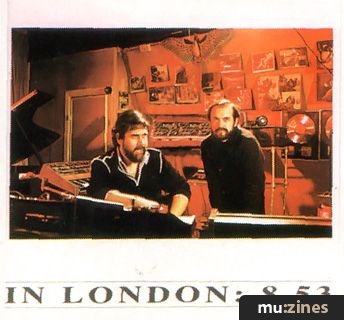
I for one hope that Michel may yet receive the international recognition he deserves and, indeed, the national distribution in the UK that has been lacking for so long. In the meantime, those wishing to become acquainted with this prolific musician can obtain most of his recordings from C & D Compact Disc Services of Dundee, a specialist importer/distributor of electronic music. Never one to rest on his laurels, Michel is already preparing to finally release the Neuronium/Vangelis jam-session, recorded in London in 1981 for broadcast on Spanish television, digitally remixed and remastered with Vangelis' blessing as a CD single appropriately entitled In London. It is based on a composition by Michel, who describes it as "...probably the most cosmic track ever played by Vangelis."
Further Information
NEURONIUM MUSIC: (Contact Details).
C & D COMPACT DISC SERVICES: (Contact Details).
DISCOGRAPHY
| Title | Label | Catalogue No. | Year |
|---|---|---|---|
| NEURONIUM: | |||
| Quasar 2C361 * | EMI-Harvest | C062021442 | 1977 |
| Vuelo Quimico * | EMI-Harvest | C064021523 | 1978 |
| Digital Dream | Tuxedo Music | TUXCD5013 | 1980 |
| The Visitor | Tuxedo Music | TUXCD5014 | 1981 |
| Chromium Echoes | Tuxedo Music | TUXCD5012 | 1982 |
| Invisible Views | Tuxedo Music | TUXCD5017 | 1983 |
| Heritage | Tuxedo Music | TUXCD5009 | 1984 |
| Alma | DRO | 4C253 | 1987 |
| Supranatural | Tuxedo Music | TUXCD5011 | 1987 |
| From Madrid To Heaven | Tuxedo Music | TUXCD5008 | 1988 |
| Numerica | Tuxedo Music | TUXCD5015 | 1989 |
| Olim (O.S.T.) | Tuxedo Music | TUXCD 5018 | 1990 |
| The Best Of Neuronium | Tuxedo Music | TUXCD 5020 | 1991 |
| Sybaris | La Fabrica Magnetica | 9110FM34 | 1991 |
| Extrisimo | DRO | 9A0867CE | 1992 |
| Oniria | Aspa Records | A1DC0103 | 1992 |
MICHEL HUYGEN: | |||
| Absence Of Reality | Tuxedo Music | TUXCD5016 | 1982 |
| 'Capturing Holograms' | Jive Electro | HIP 20 | 1984 |
| Barcelona 1992 (O.S.T.) | Tuxedo Music | TUXCD5019 | 1986 |
| Elixir | Tuxedo Music | TUXCD5010 | 1989 |
| Intimo | Hologram | HGCD2200 | 1990 |
| En Busca Del Misterio (O.S.T.) | Aspa Records | A1NC0097 | 1992 |
WITH OTHER ARTISTS: | |||
| Disc Drive* | Jive Electro | HOP 212 | 1985 |
| Dali: The Endless Enigma | Coriolis | CR-0106 | 1990 |
| Music Without Frontiers | DRO | 6G0482 DL | 1992 |
MICHEL HUYGEN ON ONIRIA
ONIRIA is the world in which I have decided to live: a place where religion, language and race are of no importance. Separatism and physical boundaries of a country have no place here, for they are simply the result of mental problems which have not yet been resolved by terricoles, and probably never will be.
My true religion and belief is in a special being that comes from another part of the Cosmos, a magical place where only one energy rules: the warm energy that emanates from the loved being, an inexhaustible fuel that now moves my whole life. In short, it is a question of loving and being loved.
This concept is condensed in ONIRIA, a parallel world, impossible to be equalled, with mental landscapes of unlimited beauty, visually reproduced only by the incomparable paintings of Tomas C. Gilsanz, wizard of cosmic colours.
Welcome to ONIRIA!
THE BIGGEST EQUIPMENT LIST IN THE WORLD... PROBABLY
MICHEL HUYGEN'S COMPOSITION STUDIO
• KEYBOARDS/SYNTHS
DBM master keyboard
Ensoniq VFX synthesizer
Ensoniq SQ-R Plus module
Kawai K1r module
Korg Wavestation EX synthesizer
Moog Prodigy synthesizer
Roland Jupiter 6 synthesizer
Roland D50 synthesizer x 2
Roland D550 module
Roland U110 module
Roland A50 master keyboard
Roland JD800 synthesizer
Roland JV880 module
Roland PG1000 programmer
Yamaha TX81Z module
• MIXING
Fostex 2412 mixer
Fostex DCM100 & MixTab
Roland M160 mixer
• MONITORING
B & W Matrix digital monitors
KEF reference monitors
Sony digital amplifier
• EFFECTS
Alesis Midiverb II
Alesis Microverb II
Alesis Quadraverb Plus
Yamaha SPX90
Zoom 9030
Zoom 9120
• DRUM MACHINES
Alesis SR16
Yamaha RX5
• RECORDING
Akai ADAM digital multitrack
Akai GX912 stereo cassette deck
Casio DA R100 DAT
Fostex M20 2-track mastering
Tascam DA30 DAT
• OUTBOARD/MISCELLANEOUS
Alesis Datadisk SQ
Anatek Studio Merge
BBE 422 Sonic Maximiser
Korg DVP1 Digital Voice Processor
Roland A110 MIDI display
Roland A220 MIDI separator
Roland SBX1000 MIDI Cueing Box
Symetrix 551 noise reduction
DUY STUDIOS
• SAMPLING
Akai S612 sampler
Akai S900 sampler
Akai S1000 HD sampler
Akai S1100 sampler
Ensoniq EPSm sampler
Roland S330 sampler
• KEYBOARDS/SYNTHS
Emu Proteus 1 module (with Protologic board)
Emu Proteus 2 module
Emu Proformance module
Ensoniq VFX synthesizer
Kawai K1m module
Korg T1 synthesizer
Korg 03R/W module
Korg Wavestation A/D module
Oberheim Matrix 6 synthesizer
Oberheim DPX1 sample player
Roland D550 module
Roland D110 module
Roland Sound Canvas module
Yamaha DX7 synthesizer
Yamaha TX816 module
Yamaha Disklavier DXW10 piano
• MIXING
Aces Sound Professional 26:16:2
Dayner 52-channel in-line mixer
Yamaha Mesa MC Series 1204
• MONITORS
Auratane Cube reference monitors
AVG NS400 monitors
Boston monitors
DAS Professional Series M12
Genelec Triamp 1022A monitors
Tannoy Little Gold monitors
Turbosound TXD100 monitors
Yamaha NS10M x 3
• EFFECTS
Alesis Midiverb
Alesis Midiverb II
ART DRX
Lexicon LXP1
Roland SDE 1000 digital delay
Yamaha SPX90
Yamaha SPX1000
Yamaha REV 7
• RECORDING
Akai ADAM digital multitrack x 3
Alesis ADAT x 2
Casio DA1 DAT x 2
Casio DA2 DAT
Fostex B16 16-track
Fostex E2 2-track mastering
Fostex M20 2-track mastering x 2
Marantz CDR1 Recordable CD
Roland DM80 hard disk recorder
Sony PCM 601 ES digital mastering
Sony PCM F1 digital mastering x 3
Sony DTC1000 ES DAT
Sony DTC55 ES DAT
Tascam 32 2-track mastering
Revox A77 2-track mastering x 2
• SIGNAL PROCESSING
Alesis S310 31 band graphic EQ x 2
Alesis 3630 compressor/noise gate
Aphex Type III Aural Exciter
Aphex Studio Dominator
ART graphic EQ
BBE 422 Sonic Maximiser
dbx 160X compressor/limiter
dbx 163 compressor/limiter
dbx 263 de-esser
Drawmer compressor
Roland Voice Processor
Symetrix 511A noise reduction
Symetrix 528 voice processor
Tascam DX2 DBX noise reduction
Yamaha GC 2020B comp/limiter
• COMPUTERS
Atari 1040ST computer (+hard disk)
Atari 1040STFM computer
Commodore Amiga computer
Macintosh IIX computer
Macintosh Classic II computer
386 PC computer
• MISCELLANEOUS
Camps Spanish guitar
Casio MIDI guitar
Digidesign A/D convertor
Digidesign DAT interface
Fostex 4030 synchroniser x 7
Fostex 4035 sync controller x 5
Fostex 8700 timecode generator
Friend Chip MIDI Matrix
HHB compact disc indexer
JL Cooper CS1 Control Station
Pearl drum kit (with Paiste cymbals)
SSL Screen Sound digital editing x 2
SSL Sound Net (with accessories)
Yamaha acoustic guitar
Various cassette decks, CD players and amplifiers
More with this artist
 Innovators - Neuronium (Neuronium) |
 Hybrid Data (Neuronium) |
Publisher: Sound On Sound - SOS Publications Ltd.
The contents of this magazine are re-published here with the kind permission of SOS Publications Ltd.
The current copyright owner/s of this content may differ from the originally published copyright notice.
More details on copyright ownership...

Sound On Sound - Jun 1993
Interview by Jonathan Miller
Help Support The Things You Love
mu:zines is the result of thousands of hours of effort, and will require many thousands more going forward to reach our goals of getting all this content online.
If you value this resource, you can support this project - it really helps!
Donations for June 2026
Issues donated this month: 0
New issues that have been donated or scanned for us this month.
Funds donated this month: £0.00
All donations and support are gratefully appreciated - thank you.
Magazines Needed - Can You Help?
Do you have any of these magazine issues?
If so, and you can donate, lend or scan them to help complete our archive, please get in touch via the Contribute page - thanks!
If you're enjoying the site, please consider supporting me to help build this archive...
...with a one time Donation, or a recurring Donation of just £2 a month. It really helps - thank you!

 @mu_zines
 RSS Feed
 Blog
Blog