


Magazine Archive
Home -> Magazines -> Issues -> Articles in this issue -> View
First Time In The Studio | |
Article from Recording Musician, January 1993 | |
Whether you run a commercial studio or are planning to use one for the first time, you simply must read this.
Rod Halling and John Etchells of The Mill Studios tell you everything you need to know if you're about to book your first session in a commercial studio. And if you're a studio operator, why not make sure all your new clients read this before coming into the studio?
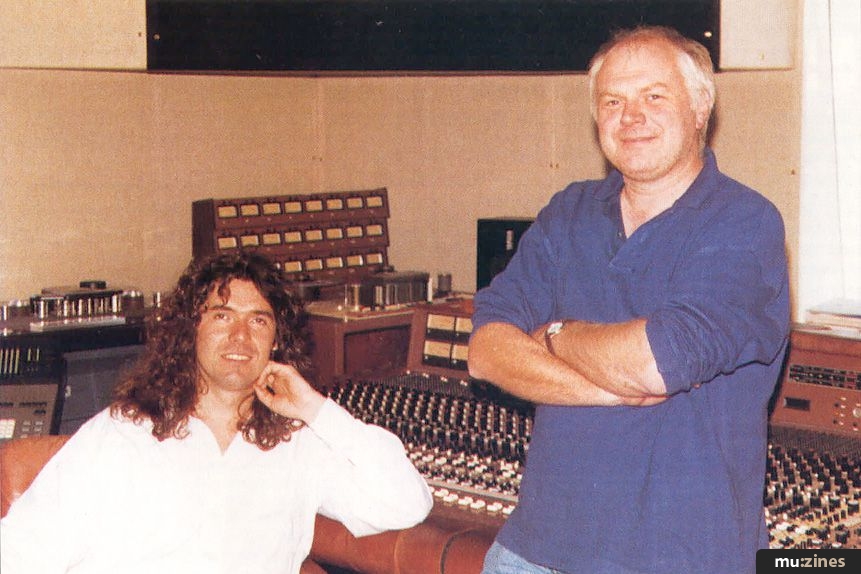
Studio time can be expensive for an up and coming band, so it is essential that they make the best possible use of the time available. But the studio can be a daunting place for first timers and it helps to know how you should prepare for the session and to have an idea of what you can hope to achieve in that time. Rod Halling and John Etchells of The Mill Studios have worked with many such bands, which makes them ideally placed to point out the potential pitfalls.
Be Prepared
Before even thinking about a recording session in a commercial studio, you must have some good material to record — play your best songs to friends and see which they like the best. And if you gig, see which songs go down the best with your audience. Get your rehearsals onto tape, even if it's only on a Walkman, because that will enable you to spot weak areas and you'll also be able to play the songs to the studio engineer before you start recording. Another benefit of these rough recordings is that you'll be able to pick out bits that might work OK live, but aren't right on record. For example, solos might need shortening, intros and links might need cutting down and so forth.
When you've picked the right songs, then they must be rehearsed thoroughly — it's no good being unsure of the solo or the arrangement. It's also very important to watch the tempo — when playing live, many bands tend to speed up or slow down, but that isn't acceptable on a modern record unless it's done deliberately for a good musical reason.
It is common practice for musicians to play along with so-called click tracks when recording, to keep the tempo absolutely constant, and this can be difficult for some people, especially drummers, who are used to setting the tempo rather than following it. This can be practised by playing along to a drum machine using headphones. When records were made almost exclusively using real drummers, some degree of tempo fluctuation could be tolerated, but now we're so used to hearing programmed music that we're very susceptible to even small changes in tempo and it tends to be very noticeable.
It is also vitally important that instruments are properly set up and maintained before a session, especially drums. It requires a certain amount of expertise to tune a drum kit for the studio, but it helps if the heads and cymbals are in good condition and that the tuning is somewhere close. A good engineer should be able to help make the final adjustments. Watch out in particular for rattling fittings and squeaking stools or pedals and fix these before the session. If the band has management, they should be asked to provide new heads, new sticks and new guitar strings prior to the session — and there should be spares of everything. And make sure everyone uses the same guitar tuner, as they all vary a bit. Remember that although there are lots of wonderful devices in the studio, they can't really help you if you're playing out of tune or out of time.
Drum heads should be changed no later than the day before to give them time to stretch, and the same is true of guitar and bass strings — though if the guitar strings are fitted properly, it is possible to fit them just before a session without suffering tuning problems. Take just two or three turns of the string around the tuning peg and give all the strings a good pull to make sure there is no stretch left in them.
In The Studio
Another common problem is not knowing how much you can expect to record in a day. This varies de-pending on the artiste, but you wouldn't normally expect to get more than three or four demo tracks finished in one day. As a rule of thumb, divide the day into three equal periods for setting up and getting the sounds sorted out, recording and mixing.
It also takes some people a little while to get used to working with headphones, especially vocalists. Some people work better with open phones, some with closed phones and other like to wear one phone on and one phone off. If the headphone monitoring isn't working properly or you can't get on with it, ask the engineer to help. We had one guitarist overdubbing a solo and noticed it was slightly out of time. He said there was nothing at all in the headphones and he was just hearing the sound coming through the door — but he played the whole solo before he came in and told us! A vocalist can have reverb in the phones if it helps encourage a good performance, but on the other hand, some people prefer to work with a fairly dry sound.
Something else that seems odd to some bands at first is the business of recording the backing to the songs and then overdubbing vocals, solos and so on. It is vitally important that the band be able to perform the songs without the vocalist, and when we've been routining bands, it's not uncommon to find that they take all their cues from the singer and are quite lost when the singer isn't there. It is particularly important to be able to perform without the vocalist if you have to record an album very quickly, because you don't want to have to record guide vocals for every song — that takes time, and can also wear out the singer's voice.
At a live gig, a guitarist might stop playing rhythm and go into a solo, but in the studio, this would leave an obvious hole where the rhythm stops playing. The answer is to record the backing track with the rhythm part continuing all the way through the solo and then do the solo as a separate overdub. But this means planning exactly how long the solo will be. A producer would be aware of these considerations, but very few first-time-in-the-studio bands have producers.
It's also important to-sort out with the engineer exactly what instruments will be on the track before the recording starts, and if there is to be a 48-bar acoustic guitar intro, don't wait until the rest of the song has been recorded before you tell the engineer. Equally, don't feel that you have to fill up all the tracks on the tape just because they're there — demos often suffer from having too much on them, and if they're over-produced, it makes it more difficult for an A&R man or producer to visualise alternative treatments for the song. The essential thing is to capture the spirit of the song — the emotional bones of it. The vocal performance is usually 80% of the whole song.
Some degree of discipline is also necessary during recording, and musicians should remain silent at the end of each song, with no rattling drum sticks or talking — many a perfect take has been spoilt by someone starting to talk before the final chord or cymbal crash has died away. Avoid noisy clothing or jewellery, too, as it can also spoil the end of a take by rustling or rattling. It also helps if the drummer counts in each song by tapping out the first three beats of the count-in on the hi-hat and then getting everyone to imagine the fourth beat. This is quite easy and leaves a gap before the first note which makes it easier for the engineer to edit out the count-in.
The Mix
When it comes to mixing, the song has to come first and the end result takes priority over individual egos.
The worst thing that you can do is let everyone work their own faders, as most people want their part to be louder. We tend to set up what I think is a sensible balance and then ask the band members what they think. In this studio, we're lucky enough to have an automated Neve console so there's no need for the band to touch the faders, but when you're mixing manually, it helps to mark any fader settings and changes with chinagraph pencil so that people know what levels they should be working to.
People tend to become nervous in the studio so we don't always tell them when we're recording. We'll always record the first vocal run through if there are enough tracks, because very often, the first take is the best.
Finally, the band members should always turn up in good time for a session, as setting up does take time and you're charged for all the time you're in the studio — including setting-up time. Any planning you can do in advance will pay dividends when you do get into the studio and you could save a surprising amount of money as well as ending up with a better recording.
Session Checklist
- Make sure you're recording your best material; play your songs live or to friends and gauge reactions carefully. Get your rehearsals onto tape if you can, so you can play them to the studio engineer.
- Rehearse your chosen songs very thoroughly to make sure you're sure of the arrangement, solos, etc. If you're under-rehearsed, you'll just waste your expensive studio time getting it wrong.
- Make sure you can play in time. If your drummer will need to play to a click track, make sure he/she is used to doing this.
- Make sure your instruments are properly maintained and set up before you go into the studio - drums should have good heads (preferably new), changed no later than the day before. It's helpful if the tuning is somewhere close. Guitars and basses should have new strings, changed in advance of the session to allow them time to stretch.
IN THE STUDIO...
- Turn up in good time for setting up so that you don't feel rushed or pressurised.
- Be realistic about what you can record in the session. You shouldn't expect to finish more than three or four demo tracks in one day.
- Divide the day into three equal periods: for setting up and sorting out sounds; recording; and mixing.
- Remember that if you can play backing tracks without needing to take cues from the vocalist, you'll save the time and effort you'd otherwise have to spend on recording guide vocals for every track.
- Let the engineer know before you start what instruments will be on the track - don't wait until the track is recorded before telling him about special requirements like acoustic intros. Know how long your solos should be before you start recording.
- Don't feel obliged to use up all the tracks on the tape machine. Demos often suffer from being over-produced or having too much going on.
- Keep still and quiet at the end of a take - you don't want to spoil a recording of a good performance with extraneous noise.
- When mixing, try to keep egos under control. Everyone will want their part to be loudest, but the song must come first.
More with this topic
 Studio Diary |
 Alice In Switzerland |
 60 Years Of Abbey Road |
 Inside Abbey Road - Careers In The Music Industry (Part 1) |
 Studio Diary |
 Studio Diary |
 Studio Of The Month - NOMIS |
 The Computer & The Sound House - BBC Radiophonic Workshop |
 Studio Staff reveal - Facts on the Rak |
 Town House Studio |
 Paradise Re-Found - Southlands Studio |
 Studio Diary |
Browse by Topic:
Recording Studios
Publisher: Recording Musician - SOS Publications Ltd.
The contents of this magazine are re-published here with the kind permission of SOS Publications Ltd.
The current copyright owner/s of this content may differ from the originally published copyright notice.
More details on copyright ownership...

Recording Musician - Jan 1993
Donated & scanned by: Mike Gorman
Feature by Rod Halling, John Etchells
Previous article in this issue:
Next article in this issue:
Help Support The Things You Love
mu:zines is the result of thousands of hours of effort, and will require many thousands more going forward to reach our goals of getting all this content online.
If you value this resource, you can support this project - it really helps!
Donations for June 2026
Issues donated this month: 0
New issues that have been donated or scanned for us this month.
Funds donated this month: £0.00
All donations and support are gratefully appreciated - thank you.
Magazines Needed - Can You Help?
Do you have any of these magazine issues?
If so, and you can donate, lend or scan them to help complete our archive, please get in touch via the Contribute page - thanks!
If you're enjoying the site, please consider supporting me to help build this archive...
...with a one time Donation, or a recurring Donation of just £2 a month. It really helps - thank you!

 @mu_zines
 RSS Feed
 Blog
Blog