


Magazine Archive
Home -> Magazines -> Issues -> Articles in this issue -> View
Readers' Systems | |
From SOS to 8-trackArticle from Home & Studio Recording, November 1986 | |
Another chance to see who bought what, why they bought it and how pleased they are now that it's too late to send it back.
Steve Harrison recalls his rise from first beginnings to home studio fanatic and successful songwriter.

When I was very young I persuaded my parents to buy me a tape recorder on which to record my master works. It did not take me long to come to the conclusion that one day I would have my own studio. My first attempts at multitracking were achieved by bouncing between two cassette recorders, blissfully unaware of tape hiss and quality deterioration.
Due to Import Restrictions and high customs duty, open reel 4-track machines were both scarce and expensive here in New Zealand. So on moving to Australia in 1976 I bought a Teac 3340S, formed a band, and recorded our efforts in a garden shed!
Eventually I began to play professionally and the Teac took a back seat as the magic of 'real' studios took over and when a new bass amp was needed the Teac simply had to go. Then, when the Portastudio came on the scene I bought one. This allowed me to play my songs to the band. However, despite the band's ultimate success, I became tired of touring, and left in 1982 to set up my own studio.
Extending your Limits
We had an aluminium extension at the back of the house which was built on a concrete block, and in my amateurish way I attempted to make it both weatherproof and soundproof.
The articles in HSR were invaluable in introducing me to new equipment, helping me to understand their principles, differences and uses, often deciding my choice of purchases. In fact I even began to hold my own against the 'knowledgeable and pushy' breed of sales staff!
As I'm by no means wealthy, I've had to rely on a combination of factors in constructing my studio, the most important of which is having an extremely patient and understanding wife! Other factors include 'luck,' in purchasing the right equipment at the right time, and the inevitable 'sales'. A lot of equipment was found by dedicated scouring of ads in search of a bargain.
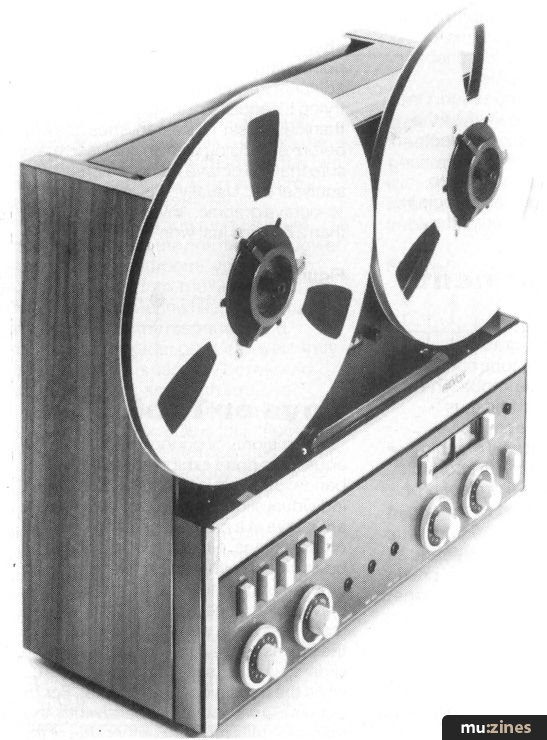
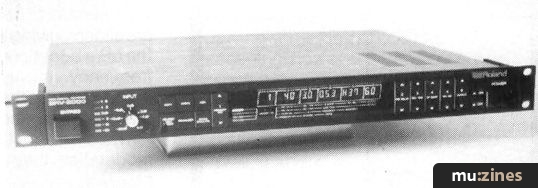
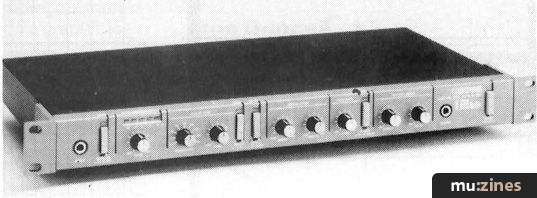
So after a long search, my studio comprises Tascam 38, Studiomaster 16:8:2, Revox A77 (modified for ½-track and 15ips), Roland SRV2000, Yamaha SPX90 and R1000, Boss DE200, Vesta Kozo DIG411, Ibanez DM1000, BossComp/Gate, Ashly Compressor, Vesta Kozo driving enhancer, Boss Super Chorus, Accessit EQ and two Gates. I also have an MXR pitch transposer and a Roland SBF 225 stereo flanger (both of which are up for sale since the arrival of the SPX90).
Another piece of equipment (which belongs to a friend but is often seen hanging around my studio), is the TC Electronics Chorus/Flanger: an unbelievably quiet, mono-in stereo-out foot pedal, and well worth checking out. I highly recommend it, and can guarantee that they can be found in most professional studios around Melbourne, (their sound and noise level make them suitable for pro applications, although they're not cheap. As most of my recording is for myself, my main microphone is a Sennheiser MD441 (chosen for its versatility) backed up by a Tandy PZM (modified as per HSR). As for drums; I have a Roland TR707, and guitars are used in conjunction with a Tom Scholtz Rockman. Monitoring is via NAD Powered Tannoy Stratfords.
Getting the Big Sound
Since having the 8-track I have found that careful bouncing yields great results and expands my production techniques significantly. And although I had heard and read that bouncing onto adjacent tracks wasn't the done thing, in practice I've found this to be nonsense.
Follow these instructions carefully and learn how to get a big sound from 8-tracks. Firstly, pre-planning the arrangement is absolutely vital to squeezing the most out of the available tracks.
I start by programming the drum machine, and then put a timecode onto track 1. After that I go back and assign the drum machine outputs to track 5, and, using the timecode to run the drum machine, record the drums and a rough bass and guitar on to the same track. It's important to put the timecode down first and then the drum track afterwards; doing both at the same time can cause syncing problems, as does recording the guide drum track on the adjacent track to the timecode.
Next come the backing vocals. On the most recent song I recorded I wanted a big 3-part harmony on the choruses so, using the SPX90 on one of the pitch transpose settings to give a slightly detuned effect, both above and below pitch, and delaying each one about 10mS I did the first part of the harmony on tracks 2, 3 and 4 and then bounced them (inserting the enhancer) on to track 8. I repeated this process with the other two backing harmonies, bouncing onto tracks 6 and 7. Next, I had to balance the 3-tracks and bounce the 3-part harmony to track 2. It's a standard practice with me now to keep my backing vocals on track 2. This is because track 1 is tied up with timecode. Now I patch the backing vocals through the Super Chorus in mixdown and bring them back in stereo using Input channels 1 and 2. (It's easier to control with the faders being next to each other.)
The next step is to move the 'guide' to track 6, I then use the same process on tracks 3, 4 and 5, to put down combinations of guitars and so on, balance them and bounce them to track 8. Repeating the process again and bouncing the results to track 7 gives me an independent stereo spread of up to 6 guitar parts.
So now, having used four tracks I am in a position to have stereo Drums, 'Pseudo' stereo Backing Vocals and stereo guitars at mixdown. And I still have four tracks left for vocals, keyboards, bass and the like. In addition I still have the space on track 2 during the verses, and after all this the sound quality is still good. I have found that on Ampex 456 I can safely record 'in the red' without tape overload and distortion.
Usually the bass is the last to go down (I am a bassist); and that goes over the guide track. With the drum machine running in sync with the track, I then play along. Drop-ins are near impossible when recording the last track using the drum machine, as the sync to the drum machine is not SMPTE so if you stop the track at any point during the record you have to go back to the top of the track to get back in sync.
I try always to keep my options open. However I still have three and a bit tracks left for vocals, keyboards and solos (3, 4, 5, and 2), so I can still play around with keyboards if the song needs it. Here again there are options: I could rewind parts on tracks 3 and 4 bounce them to 5 or if necessary 3, 4 and 5, bounce them to 6 and re-record the guide onto 5. (You can move your guide track where and when you want to.) I could then do more keyboards on 3 and 4 drop them onto 2 in the verses and still have 3 and 4 for vocals if required. So quite complex arrangements can be catered for with a bit of forethought!
Save the Channel
My keyboard is a JX3P with a built-in sequencer, so more options are available. If the keyboard part is too complex or fast for me to play I can sequence it using the trigger out from the drum machine and record that section on tape. Then another sequence can be put in and the keyboard can be bought back through two space channels on the desk during mixdown; thus utilising the stereo outs on the synth.
In fact I'm only just starting to experiment with the capabilities of triggering keyboards from the drum machine, but have already found that not only riffs, but also chords during verses and choruses are possible!
Then there's MIDI, which I have only as yet, dabbled with. However, with the MIDI capabilities on the SRV2000, and SPX90 I think it is my next area of development. I'll be looking seriously at the Roland MC500 MIDI sequencer as finance becomes available.
But back to the mix. Obviously I have the benefit of three top quality reverbs on mixdown, so I don't have to record the reverbs as I go, however I generally add short reverbs on bounces to provide a bit of life and separation to the sounds, and the guitars are always set up and recorded with all their effects, it establishes their sound and makes me play better. I have also found that recording a combination of the pitch transposer function and a gated reverb onto tracks with vocals and guitar solos makes them really stand out, even at lower volumes.
The Yamaha R1000 has lately been left patched into the insert points on the snare drum channel, and I achieve a balance between direct/reverb using the control on the unit, which saves me using another input channel, especially as the R1000 has on board EQ.
The SRV2000 is the 'blanket' reverb, and the SPX can be used for either reverb or any other of its multitude of useful effects. In fact the SPX90 is invaluable, and I don't think I could live without it now, as in one form or another I have used it on every track I've recorded since its purchase. However if I had a say in the matter, I would ask Yamaha to change the functions slightly. I personally feel that the EQ and gate would be more useful in line with the effects rather than separate functions. If that were the case you could set up and EQ individual sounds and use aux returns in preference to input channels so the gate would shut down the digital 'noise' which would be helpful in making the mix just that bit quieter. Bearing in mind the electronic design of the unit, though, this seems too much to hope for.
All of the effects units are attached to a Teac PB64 patchbay, and I use Fostex normalised bays for insert points and permanent connections. Another thing I did was to use a Fostex patchbay to give me insert points on the eight group outs to the 8-track and insert points on the eight tape returns to the input channels. This gives me the opportunity, when bouncing down 2 or 3 tracks onto one, to patch in a compression/gate to keep the individual track level fluctuations in check, and get more level onto tape. Or I could patch an effect in-line before it gets to the desk. Also I can use it as an extra auxiliary should I want to 'tap off' a signal for extra processing and returning through another channel: a really useful facility.
Don't Give Up
'Well its alright for him. He's probably loaded with money.' I hear you say. But that's simply not the case. The point is, I decided, when I started that I wanted the best possible set-up possible with equipment that would last and accordingly diverted all available funds into the studio. If you're really serious, you have to make sacrifices in other areas to achieve what you want.
I'm a songwriter, and a successful collaboration resulted in royalty money which paid for the SRV2000, and the SPX90, but as the song was written and demoed in my studio, it sort of proves the point.
A final word. If a recording doesn't quite 'make it' these days, I'm not really in a position to blame the equipment, so I have to work harder too! Good luck. It can be done.
More with this topic
 At Home in the Studio - Band in a Box Studio |
 Get it out of your System - (The best that is) (Part 1) |
 Studio DIY |
 |
 Home Taping - Jim Murphy |
 Building a Home Recording Studio - Acoustics |
 Home Taping |
 Home Electro-Musician - Gerry Taylor |
 African Music (Part 1) |
 Home Taping: Tom Robinson |
 Home Taping |
 Cocteau Construction |
Browse by Topic:
Home Studio
Publisher: Home & Studio Recording - Music Maker Publications (UK), Future Publishing.
The current copyright owner/s of this content may differ from the originally published copyright notice.
More details on copyright ownership...
Home & Studio Recording - Nov 1986
Donated & scanned by: Mike Gorman
Feature by Steve Harrison
Previous article in this issue:
Next article in this issue:
Help Support The Things You Love
mu:zines is the result of thousands of hours of effort, and will require many thousands more going forward to reach our goals of getting all this content online.
If you value this resource, you can support this project - it really helps!
Donations for April 2026
Issues donated this month: 0
New issues that have been donated or scanned for us this month.
Funds donated this month: £0.00
All donations and support are gratefully appreciated - thank you.
Magazines Needed - Can You Help?
Do you have any of these magazine issues?
If so, and you can donate, lend or scan them to help complete our archive, please get in touch via the Contribute page - thanks!
If you're enjoying the site, please consider supporting me to help build this archive...
...with a one time Donation, or a recurring Donation of just £2 a month. It really helps - thank you!

 @mu_zines
 RSS Feed
 Blog
Blog