


Magazine Archive
Home -> Magazines -> Issues -> Articles in this issue -> View
Stagecraft | |
Big George's Guide To Good GiggingArticle from Sound On Stage, February 1997 | |
Big George Webley ponders on what will make an audience turn its back on the pleasures of satellite TV, wide screen video, CD-ROM, the Internet, computer games, and a kiss and cuddle on the sofa and brave the elements to see a local band. He came up with Stagecraft.

Apart from worldwide fame, fabulous wealth, public acceptance, and a catalogue of recorded material, what do all the hit bands have that you haven't? There's a very thin line between named bands like Dire Straits or Orbital and your band, but the difference is huge. They can charge £50 per ticket and sell out, whereas your tickets can be £2 on the door and you'll collect gate receipts of less than a tenner. Naturally, they have a major worldwide record deal and you haven't, although you'd be a fool to think that securing a record contact is the end of your problems — it's just the beginning.
Why's that you may ask? Well, if you get signed up by a major company for billions of pounds, you will find that every aspect of your life is going to be put through the media circus — from how you comb your hair and which trousers go with what lip gloss on the never ending ritualistic boring photo shoots to release date windows of maximum marketing potential. If you think that was a load of mumbo jumbo nonsense, wait until your umpteenth meeting with the promotion department!
If you're signed by an independent label, however, you won't have to put up with dozens of different departments, all run by tossers, but you will have to wait for your record company to save up enough pennies to get your first record pressed. Then there's the joy of learning how no-one in the media will listen to anything that doesn't come from a multinational company run by chemically confused executives. Another thing being on a smaller label teaches you is the difference between your record having a distribution deal and it actually making it into the shops.
These matters are not the motivating force of a live band whose sole aim is to entertain the punters. On stage, all bands are free of the business side of things to concentrate on the fans. Loyal friends and family who have saved up their pennies in order to leave their nice warm front room and come out to see the best band on earth play: YOU!
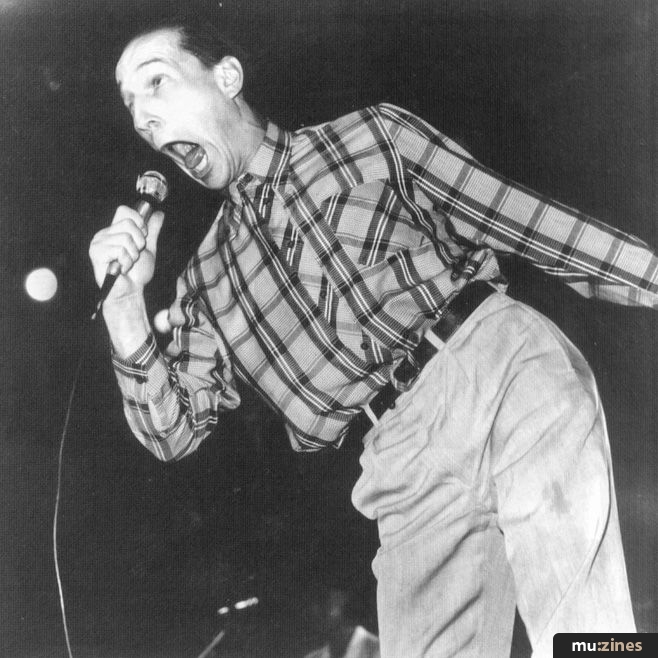
Tip: look like you know why you're on stage!
APPROACHING THE STAGE
So how do you go about fulfilling your side of the bargain? There is no one answer; there are several hundred. Ozzy Osborne has a different approach to Cliff Richard singing to centre court at Wimbledon. The end result should always be the same — people should go away having had their money's worth. So how do you go about giving your audience a night to remember for the rest of their lives?
In the beginning, there was Elvis Presley. He used to simply swivel his hips to an adoring crowd, who would go absolutely wild, despite being unable to hear his un-amplified band. 20 years later, Elvis Costello and the Attractions would run on stage as if they'd just got to the gig from somewhere fantastic. During the set, they would be rooted to the spot, hammering out class song after song at the appropriate tempo, with such dynamic power that it seemed as if the safety of the planet depended on it. Then at the end of the show, the band and the leader would run off stage as if they were on their way to the best place in the world, quickly nipping back to do an encore at the last minute.

Sound On Stage's Editor Paul White has been honing his craft for years.
Despite both Elvises being atrocious guitarists, their bands always played the songs on full attack mode and never strayed off into self-indulgent rubbish. Naturally, time slows the process, and 20 years ago, it halted for Presley's live show for good. As for Costello's 20 year reign and continually changing (but never bettered) ensembles, it's hard for string quartets to sprint on stage. Luckily with the calibre of material and musicianship involved, audiences would enjoy his shows if the whole band waddled on with zimmer frames, which I believe is scheduled for the tour after next.
However, this is a serious article and will therefore completely ignore the ever increasing 'manufactured for the media' type bands who have replaced talent and musical ability with the simple skill of wiggling their bums in time to a beat. These bands might give sad old TV producers something to lust over; however, they do nothing to develop a healthy music scene. But then neither does giving a once hilarious bricklaying actor his own TV series to promote his atrocious venture into Country music, and then giving him a second primetime BBC1 series to do exactly the same for an even worse follow up album.
WHO ARE THEY?
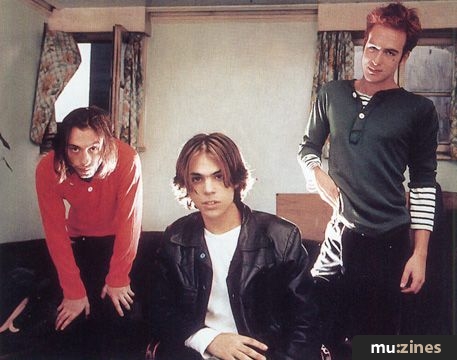
Indie/techno fusion band Arkarna spent two weeks rehearsing their 'thang' for their gig supporting Dreadzone.
A new young band, who haven't had there own TV series, but do have a rich source of musical talent and creative ideas, are the three piece indie/techno fusion band Arkarna, signed to WEA records. Primarily a studio-based outfit, it took a year for Arkana's first single 'House On Fire' to be released. They were thrown in at the deep end of the live gig circuit with a short run of prestige showcase gigs. I asked Ollie, the lead singer, how they went about preparing themselves for their fifth gig at London's Astoria, supporting Dreadzone.
"We spent about two weeks in a cheap rehearsal studio, getting ourselves together with the session keyboard player and drummer we use on stage, and moulded in the technology we use and put shape into our set. When that was sorted, we took three days in NOMIS (arguably the most glamorous rehearsal facility on the planet) to kick the whole thing ready to confront an audience. When we go on stage, it starts with James playing acoustic guitar, and then everyone else kind of relaxes into the first song, while I wait off stage vibing myself up ready to come on like a magnet. We draw people to us, we get them going. Our set is quite continuous, the music never stops, and people just melt into it — the sooner the better for everyone. I just wanna sell my songs to whoever's out there. All our tracks are song based, and you've just got to give them to the audience, positive."
So did that approach work?
"Yeah, everything ended up great. The whole place was moving. My sister was delighted, because I wished her happy birthday, and everyone cheered. People seemed to get off on that kind of family 'thang'."
Everything went perfectly then?
"Well, no, after we came off stage, there were loads of people who really liked our music and had had a great time, but didn't know who we were. You have to tell the people who you are or they won't know."
Arkarna's next single, 'Future's Over-Rated', will be released on March 10th.
TOURING HEROES
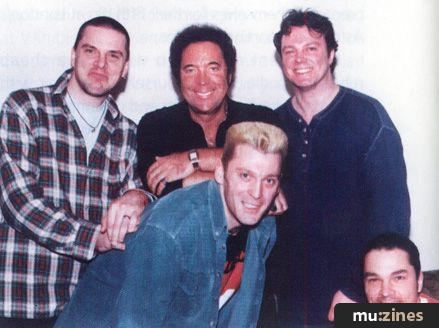
Smalltown Heroes with one of their fans Tom Jones, who knows a thing or two about stage presence himself.
One of the most impressive bands around (and a big favourite with Tom Jones), who have yet to be discovered by the mass media, are the Sunderland-based combo Smalltown Heroes. With a million gigs under their belt, supporting people like The Stranglers and Jeff Healey as well as headlining clubs in Britain and across Europe, they are tighter than a mouse's ear, more powerful than a locomotive, although they're not able to leap tall buildings in a single bound — yet. The nucleus of the band has been together since school, and before they became Smalltown Heroes, a couple of them were in the Punk band Toy Dolls, gaining valuable experience touring America, but that's ancient history. Baz Warne, guitar player extraordinaire explains their approach to live work.
"With us, it's just guitar, bass, drums, and vocal chords at full tilt; we don't use any trickery. When the band first kicked off, we were the archetypal good time pub band. Get a few beers down you and go out for a laugh. But then you realise, you can't do that when there's X number of people coming to see you play so you've got to be bang on the money every single night.
"We've been playing on stage forever, and we've got a loose kind of ritual to gigging. After the soundcheck, we get as far away from the venue as we can for a drink or maybe a bite to eat. We get back to the venue about 20 minutes before we go on. There's no nerves, we've done it that many times. Just before we go on, we all have one of these really strong throat lozenges called Vocal Zones (the choice of most professional singers, available from all good chemists; the very best you can buy). That gets our throats open and ready for action, then we just go straight on and do it. I know some bands wet themselves or throw up before they go on, but we're not like that.
"We are one of these old-fashioned bands, who like to start the set with a massive wallop for the first two or three numbers, then bring the tempo down a bit, before building up for the big, 'right between the eyes' ending. I don't care what people say, that always works!
"It's also important to tell the audience the name of the band between songs, especially at business and suit gigs, or when you open for another band. You want to ram it in, but you don't want to get boring about it. We also always have loads of flyers, mailing lists, badges, and photos to give away; people love that sort of thing.
"The band had been touring solidly since 1989, and it took us four years before we signed our deal with E G Records, although we'd had a publishing deal for a couple of years prior to that. After signing, it was almost a year before our debut album Human Soup was released, but in between recording it, we were always on stage somewhere".
Smalltown Heroes are currently touring across France and Germany, but will be back in Britain in late March. They have a new single coming out soon, and a new album Lost In Showbiz will follow later in the year.
PRESENCE AND CORRECT
Gigging — whether it's hundreds of shows a year or half a dozen showcase gigs to industry bosses, it's an essential part of almost every act's musical career. On the whole, the music a band plays is simple chords played along a logical structure, and technology has become user-friendly to the point of spoon feeding programmers. The presentation of every band's work to the masses is an art form, which has to be worked on seriously to be perfected. It's no good looking at how different it was for bands in the '60s and '70s, everything was completely different then. The price of petrol was less than 7p a litre, a loaf of bread was 4p, and a brand spanking new USA Gibson Les Paul would set you back almost £200.
Nowadays audiences, be they live or out in TV land, expect a standard of entertainment from an act which does not come from simply turning up as loud as possible and over using a multi-effects pedal. They want stage presence, a fluid approach, toe-tapping tunes, and their money's worth. Being a professional musician means you make a living out of playing; having a professional attitude means you intend to.
GETTING ON AND OFF STAGE — DOS AND DON'Ts
- Do get all your equipment and props ready before you go on stage so that when announced you appear on stage like the entertainment phenomenon you are.
- Don't amble on in dribs and drabs shouting "has anyone seen our keyboard player?" Very messy.
- Do know what the first song of the set is and who starts it. This applies to every tune you play.
- Don't let the guitarist fart around with a new pedal, or play the same old Hendrix lick, or worst of all, part of a lead break to one of the songs in the set. This also applies to bass players slapping or drummers paradiddling or tightening up one of the Tom Toms, especially when it's probably only hit once during the set anyway.
- Do look like you're supposed to be on stage — facing the audience with an expression not of sheer panic.
- Don't worry if someone (including you) makes a howling mistake in a song. Less than half the audience will notice and probably those that do won't care.
- Do leave the stage when the last song is finished. The crowd are bound to go mad, insisting you give them an encore. If you haven't rehearsed an encore, go back on and play the first song again; they'll probably be too drunk to notice.
- Don't wrap up leads or pack away cymbals the second you've finished the last song, it looks cheap. Give it five minutes.
AUDIENCES
More from these topics
 Stagefright (Part 1) |
 Tommy's Technical Transition |
 Live for the Record |
 Live Miking - Drums |
 Wot, No Keyboards? - The Alternative MIDI Controllers Session (Part 1) |
Remember, Remember... - 21 Things To Remember On Tour |
 Top Tips For Successful Singing on Stage |
 Session Men Say Go - Sessionmen Special (Part 1) |
 Say It Loud! - Power Amps and Loudspeakers |
 Music On Tap |
 Postcards From America |
 Is it Live, or Is It Art? |
Browse by Topic:
Live
Performing
Publisher: Sound On Stage - SOS Publications Ltd.
The contents of this magazine are re-published here with the kind permission of SOS Publications Ltd.
The current copyright owner/s of this content may differ from the originally published copyright notice.
More details on copyright ownership...

Sound On Stage - Feb 1997
Feature by Big George Webley
Help Support The Things You Love
mu:zines is the result of thousands of hours of effort, and will require many thousands more going forward to reach our goals of getting all this content online.
If you value this resource, you can support this project - it really helps!
Donations for April 2026
Issues donated this month: 0
New issues that have been donated or scanned for us this month.
Funds donated this month: £0.00
All donations and support are gratefully appreciated - thank you.
Magazines Needed - Can You Help?
Do you have any of these magazine issues?
If so, and you can donate, lend or scan them to help complete our archive, please get in touch via the Contribute page - thanks!
If you're enjoying the site, please consider supporting me to help build this archive...
...with a one time Donation, or a recurring Donation of just £2 a month. It really helps - thank you!

 @mu_zines
 RSS Feed
 Blog
Blog