


Magazine Archive
Home -> Magazines -> Issues -> Articles in this issue -> View
Using Microphones | |
Buying MicrophonesArticle from Home & Studio Recording, December 1984 | |
Useful advice on how to go about the business of buying microphones.
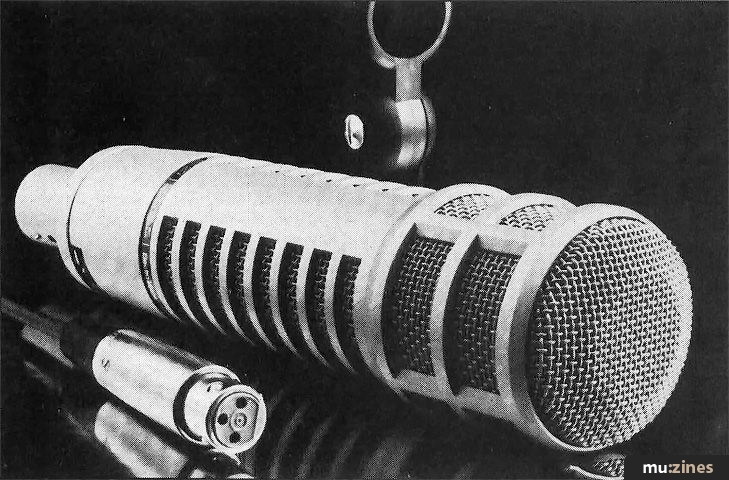
Electro-Voice RE20.
With Christmas time growing near, I've decided to devote this instalment of Using Microphones to the subject of microphone purchase. It's not as simple as walking into your local music shop, telling the salesman you'll have 'that silver one over there' and parting with the cash. Armed with the following basic considerations, however, you should be able to make your mic shopping list meet your recording demands.
What To Buy?
Dynamic mics - best for close-up work where high SPL (Sound Pressure Level) situations are likely to be encountered or where a controlled amount of colouration is required eg. presence boost.
Condenser mics - suitable for extended high frequency pick-up applications, such as overhead mics for a drum kit or snare, hi-hat pick-up. Best proposition if a neutral (life-like) and analytic sound is the order of the day.
Electret mics - physically their particular transducer principle allows them equal (if not superior) performance compared to 'true' condenser mics. However, electrets can be, and are, produced very cheaply and it is these electret mics, with a sound corresponding to their price, that has ruined the reputation of the high quality 'true' electret. Generally, there's no need to shy away from electret microphones, but be careful and very critical with those carrying an extra-low price tag.
Where To Save
You can save money by ruling out microphones with features you don't need. Switches, for example, add to production costs and thus to the selling price of the finished product. You won't need an on/off switch for recording purposes. Bass cut switches on microphones usually provide either a roll-off of signal from around 200Hz to compensate for proximity effect, or a cut-off below 100Hz to combat low frequency rumble or 50Hz mains hum.
If your mixing desk has a good equalisation section on the input channels, this can be employed to achieve a similar result as the bass cut switches. Likewise, if you don't intend to use your condenser microphone close-up in front of loud instruments, you can always choose one without a built-in attenuation pad.
You can also cut costs by using a cheap (DIY?) external elastic microphone stand adaptor (see HSR May 84) to help reduce structure-borne noise, instead of buying a mic with an internal transducer shock-mount (vocal types).
Finally, you can profit from the manufacturers' own company policies. There are usually good quality mics which they have to sell below a certain price barrier for reasons of competitiveness; usually it's their cheapest vocal mic in the range, such as the AKG D80, Beyer M300 or Shure 518 to name but three.
Used Microphones
You can often strike a good deal when buying a used microphone. While the fast development of electronics keeps speeding up the change in the field of signal processing equipment, most pro studios still use, among others, microphones designed three or more decades ago: Neumann U87, Electro-Voice RE20, AKG D12 and so on. Top microphones in those days were acoustically equal to contemporary designs. What has been improved is ruggedness, reliability, handling and price/performance ratios. For recording-only purposes, it's absolutely OK to buy a vintage model.
Besides a thorough inspection for any signs of rough treatment (damaged surface etc), close attention should be paid to the following details.
If the mic incorporates some exotic type of connector, make sure the mating plug and cable are still available - some companies used specific types that you can't obtain anywhere nowadays.
If it's a condenser mic take a look at its power supply requirements. Some vintage models were originally sold with their own power supply unit, others used non-standard phantom powering.
As for prices, standard items like Neumann, AKG, or EV mics are offered regularly through the classified ads in studio magazines and the price level for secondhand gear can thus be readily checked out.
Testing Mics
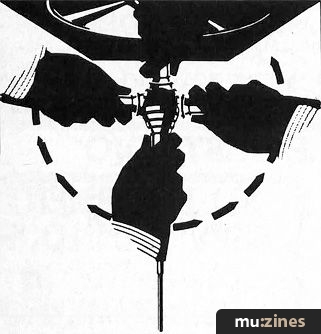
Figure 1. Rotating the mic in front of a small monitor gives you a feel for its directional characteristics (as feedback changes).
Obviously, for testing purposes you'll need to talk into the mic first. It's always best to bring along a similar microphone you personally know very well and do an A-B test (side by side comparison) with your mic and the one 'under test'.
Check out the proximity effect (bass boost at close distances) by talking into the mic from various distances. Susceptibility to 'pop' can be examined by pronouncing suitable words (Pop, Peter Powell (!) or whatever) with the mic right at your lips. Frequency response switches can be easily tested using the proximity effect and singing sustained bass notes (for a bass cut) or by making 'ffffhhh' sounds (for a treble switch).
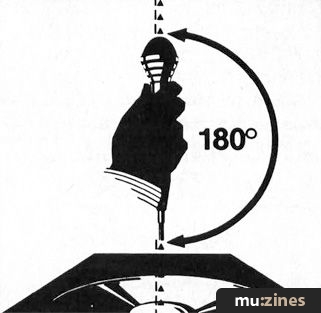
Figure 2. Cardioid mic: maximum feedback 180 degrees from speaker axis.
The acid test for a mic's acoustical qualities is to ta|k into it from the side. Listen very carefully - the timbre (tone) of your voice should not change. Uniform timbre (though at a lower level) indicates a 'tight' polar response pattern which means no colouration from sound leakage of other instruments or from a moving sound source.
With condenser mics, especially with electrets, it's a good idea to check their performance at high sound levels. Miking up something like a tom-tom will show you quickly at which point the mic starts to distort.
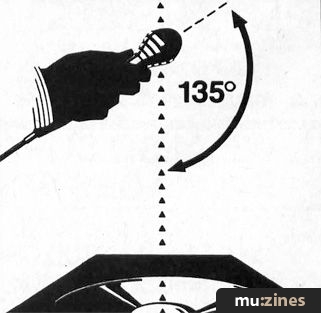
Figure 3. Hypercardioid mic: minimum feedback 135 degrees from speaker axis.
To find out about a mic's directional characteristic, take a small single-driver loudspeaker cabinet (a micro-monitor such as an Auratone will do very nicely) and turn the microphone through a full circle in front of it, approximately 1 foot away from the cone (Figure 1). The angle of the maximum sound suppression (minimum feedback) will indicate the mic's directional characteristic eg. cardioid (Figure 2) or hypercardioid (Figure 3).
Of course, it's always best to take the mic home before buying it and to check it in an acoustically familiar environment, but most shops are, naturally, reluctant to do this. Try and find a friend or nearby studio who has the mic you want and get a demo from them if at all possible.
As you can hopefully now understand, buying a microphone is not as easy as you may have initially believed, but good luck and have fun bargaining!
More with this topic
 Basic Microphone Technique |
 Mikes And The Mechanics |
 Room To Roam - Radio Microphones |
 When the Pressure's On |
 Looking at Microphones |
 VHF Wireless Systems Roundup |
 Live Wire - Miking Up |
 Sound Advice (Part 1) |
 Live Miking - Drums |
 Miking Music |
 Perfect vocals - how to sing them, how to mic them, how to treat them, how to tape them... |
 Contact Miking Real Drums |
Browse by Topic:
Microphones
Publisher: Home & Studio Recording - Music Maker Publications (UK), Future Publishing.
The current copyright owner/s of this content may differ from the originally published copyright notice.
More details on copyright ownership...

Home & Studio Recording - Dec 1984
Donated & scanned by: Mike Gorman
Feature by Wolfgang Staribacher
Previous article in this issue:
Next article in this issue:
Help Support The Things You Love
mu:zines is the result of thousands of hours of effort, and will require many thousands more going forward to reach our goals of getting all this content online.
If you value this resource, you can support this project - it really helps!
Donations for May 2026
Issues donated this month: 0
New issues that have been donated or scanned for us this month.
Funds donated this month: £0.00
All donations and support are gratefully appreciated - thank you.
Magazines Needed - Can You Help?
Do you have any of these magazine issues?
If so, and you can donate, lend or scan them to help complete our archive, please get in touch via the Contribute page - thanks!
If you're enjoying the site, please consider supporting me to help build this archive...
...with a one time Donation, or a recurring Donation of just £2 a month. It really helps - thank you!

 @mu_zines
 RSS Feed
 Blog
Blog