AKG LSM50 Micro Monitors.
(HSR Nov 83)


Magazine Archive
Home -> Magazines -> Issues -> Articles in this issue -> View
Article Group: | |
Studio Test | |
Mini Monitors RoundupArticle from International Musician & Recording World, March 1985 | |
Curtis Schwartz puts five pairs of mini-monitors through their paces in a consumer test
In the beginning, God said "let there be mini monitors", and there was Auratone...
The successful Auratone C5 monitors can be spotted in most studios around the globe, and this is mainly due to two factors — firstly, they give a good indication as to what recorded material will sound like when played back through small, domestic systems (portable cassette recorders, car stereos etc), and secondly they can be a consistent reference point for the engineer or producer who travels from studio to studio. In fact, they do this in much the same way as 'big' monitors are designed to, giving you a sound you are accustomed to in most environments.
However, there are quite a few other mini reference monitors available from which to make the ideal choice for your particular situation — whether it be a home four-track or a commercial 24-track studio.
I have picked out five popular mini monitors — three of the single driver variety and two two-way models, all relatively inexpensive (for studio gear) and aspiring to achieve the same goals.
TOA RS-21M
RRP: £36.80
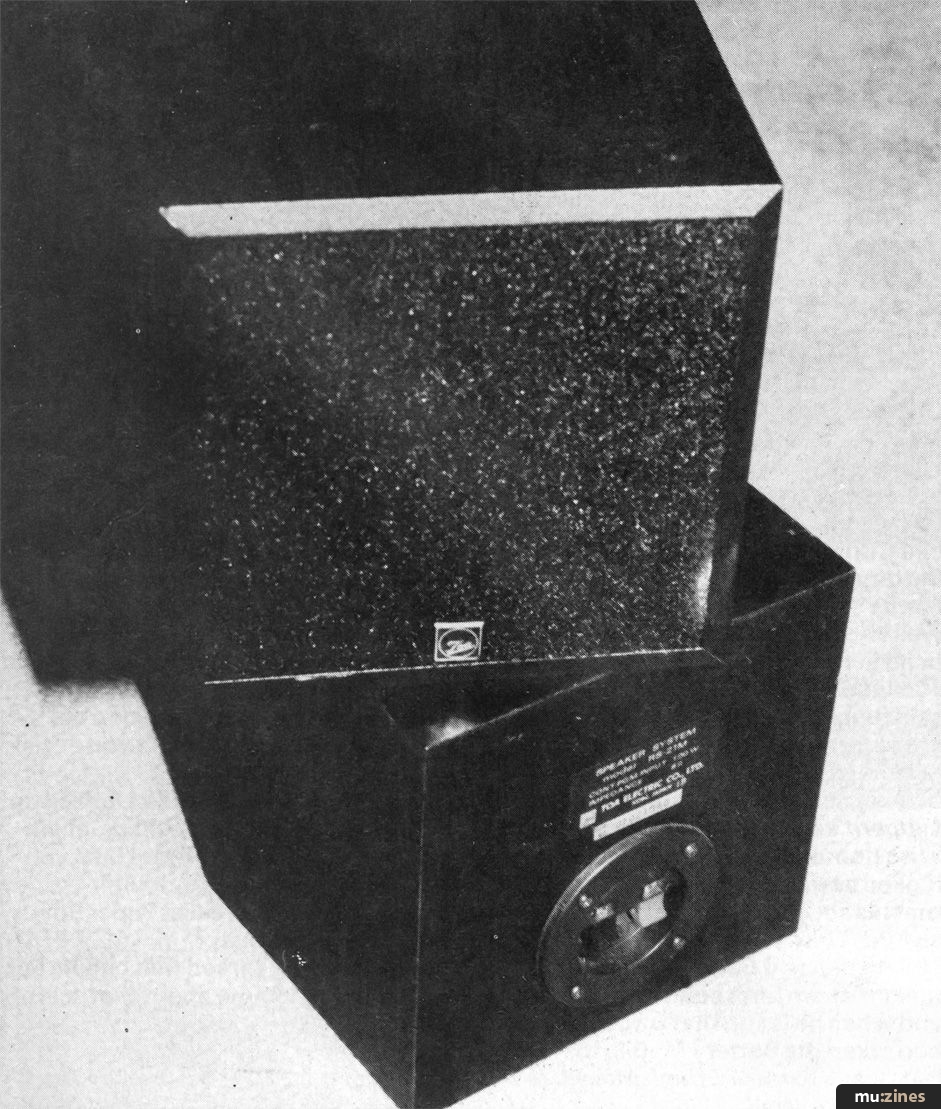
Toa: Even tone...
Starting with the least expensive of the bunch, the TOA RS-21M are rated at 100W music power and consist of a single 5" driver in each of the two fairly conventional looking boxes. The boxes (as boxes is all they are) measure 16cm square, and on the back are two recessed spring terminals for speaker cable connection, and on the front is the non removable black grill cloth.
Not surprisingly for a unit of this size, the deep bass response could be termed 'non existent' yet the tone is not rendered too harsh. An important element to consider, especially for a speaker of this size, is its 'polar response'. This is a consideration of how the tone changes at different listening points around the speaker. If (as is usual) the mini-monitors are mounted on top of the mixing console, and the engineer is sitting more or less centrally with the producer by his side, and perhaps the odd musician the other side, it is important that everyone is hearing more or less the same sound. Depending on the speaker's polar response, what is usual for a driver of this size is for the optimum brightness to be directly in front of the driver, with lessening amounts of brightness as one moves away from center.
The polar response of these speakers from TOA is such that moving two feet from a position directly in front of the speakers will result in a fairly noticeable reduction in frequencies above 5 or 6kHz, yet nothing more substantial or misleading than you might expect to find on a car stereo, for example.
The speakers' sound quality, however, was found to be quite acceptable for its particular job — a fairly 'even' tone, if perhaps a little lacking in transparency, yet excellent for the price.
AKG LSM50
RRP: £63.25
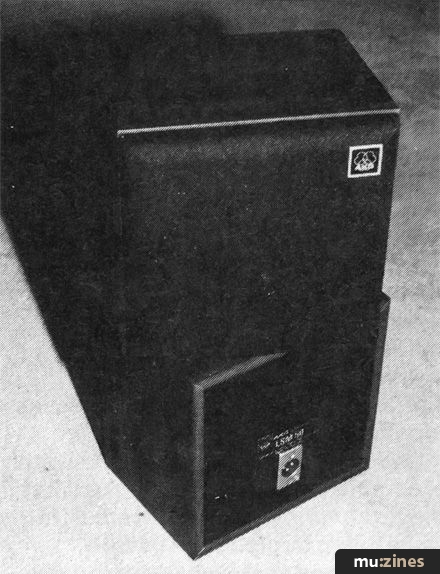
AKG: A bit soft...
The AKG LSM50 are again Auratone look-alikes, yet their overall construction (three-pin XLR connectors, removeable cloth grill, 1.2cm thick wooden enclosure... ) appears to be first-class. In fact, I found AKG's choice of having XLR connections (rather than the more usual screw or spring terminals) to be an excellent one, and hopefully other manufacturers will follow suit.
The LSM50's sound quality, although not too dissimilar to any of the other units, was not quite able to live up to one's expectations formed by their excellent appearance. Thus superior sound quality does not necessarily follow superior construction — it seemed to be over 'angry' in tone and the polar response was found to be rather more directional than desireable — a slight move off center, and you'll get an obvious drop in the top end. However, the sound was a little more transparent than most, and not too uncomfortable — in fact this is one of the selection of mini monitors that I would be more likely to choose, completely contrasting with the larger monitors, with, perhaps, an intermediate pair of hi fi speakers between the two.
Auratone C5
RRP: £86.25
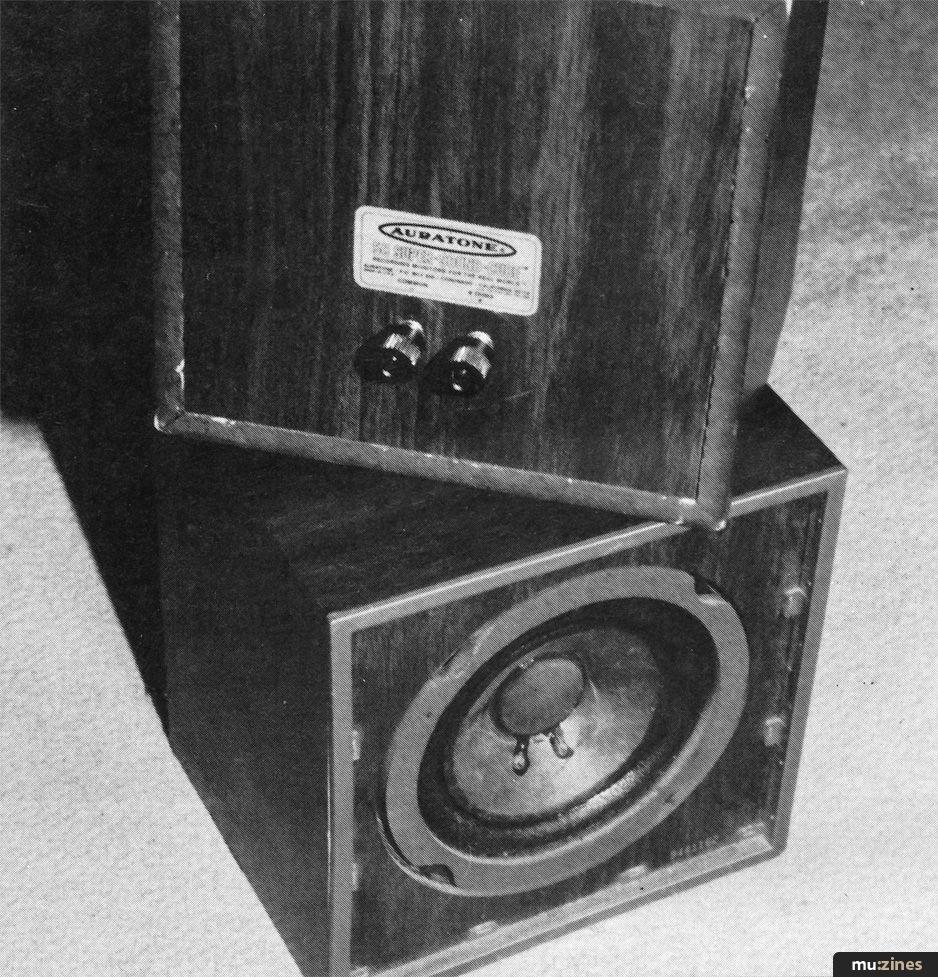
Auratone: The originals...
Moving up another step in price we find it's the old faithful Auratone's turn on the desk. To justify this high(ish) price for something which is designed to sound naff(ish), Auratone have the reputation to justify it. Again with a 5" driver in a square, wooden box, the Auratones also have removable foam grills, and 'round the rear you'll find two rather fiddly recessed screw terminals. In fact, these are my least favourite terminal; nevertheless, they do the job.
As with the previous two single 5" driver units, the bass response is typically absent, yet the C5s are a little better in the high frequency department, reaching up to 18kHz before fizzling out. The journey up there, however, is not a smooth one — having a rather weak response from 3-6kHz, and a quite obvious peak at around 8kHz.
The polar response is rather better than most of these units: although still not getting the full picture of the treble response as you move away from center, you don't get any sudden drops or peaks in response.
Teac LS-X7
RRP: £74.75
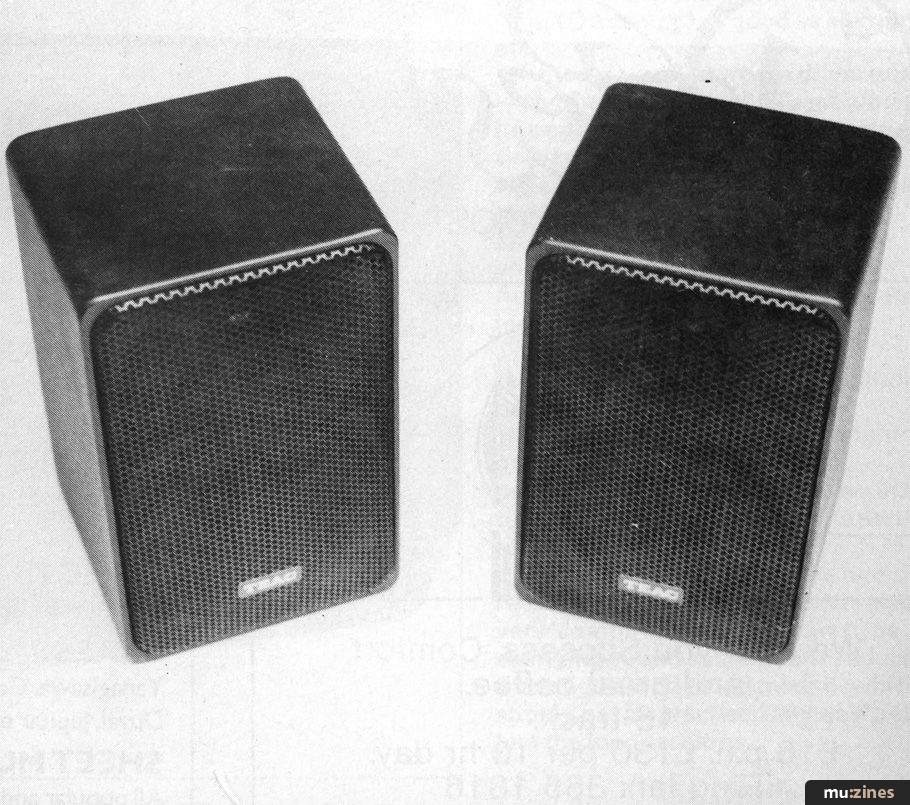
Teac: Great top end...
These are a pair of twin driver units, which are becoming more and more popular as a source of alternative system monitoring, as more and more portable radios etc have both tweeters and woofers.
The Teacs consist of a soft dome tweeter and a 4" woofer mounted in a rectangular shaped aluminimum box. A perforated black metal grill covers the drivers and the overall tone of the Teacs proved to be surprisingly un-metallic considering the amount of metal used in their construction.
By having two drivers, however small, the Teacs can reproduce the bass end with a little more 'confidence' — and reaches down to 100Hz before falling away. The same thing applies to the very high end — which reaches right up to 20kHz and above!
The manufacturers specify their handling to be at a maximum of 40W music power, however I found this to be rather a conservative rating as the LS-X7s appeared to remain in control of themselves when driven pretty hard from a Quad 405 power amp (100W).
Connections are made with two push-in terminals, and these speakers also come with stick-on feet, which one positions depending on the placement of the speakers — either horizontal or vertical. In either position, the polar response was rather better than the single driver units, with the horizontal position providing the widest high frequency spread.
JBL LT-1
RRP: £204.70
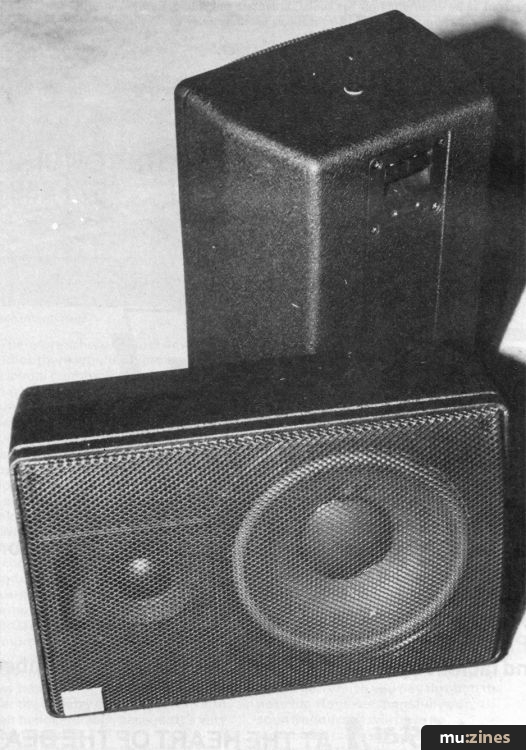
JBL: Built like a tank
You might wonder how I can consider taking into account a pair of monitors costing more than twice the price of the aforementioned units in the same review. Well, simply because they possess similar design criteria, and that it is also of interest to see what the extra notes can buy within the same limitation of size.
These again are twin driver units, similar in construction to the Teacs, ie in all-metal housing and grill. The woofer is 5" in diameter giving a solid response down to 100Hz. The frequency response is then relatively smooth up to 15kHz, at which point it jumps up a little, rather than falling off.
Its polar response is rather wide in both the horizontal and vertical plane, and these monitors come with mounting brackets that enable the speakers to be mounted either in the vertical or horizontal plane — either on the mixing desk or walls etc.
The rear connections are again spring loaded clips, recessed into the housing, and the LT-1 s are built 'like a tank'.
These speakers are rated at 100W music power, and they appeared to handle such high power levels with ease. Their tone was always solid and extremely punchy for a small unit (9.6" x 6.3" x 5.0"). In some instances the LT-1 s would even be passable as the studios main monitors — in small control rooms, etc.
Conclusion
Of the single driver units, the general tone is fairly similar between them — the variations of liveness of the boxes etc finally result in a sound that eventually comes down to personal preference — the AKGs sounding extra hard, the Auratones a little more even, and the Toas sounding perhaps a little more 'normal', with a 'nice' overall tone. At the same time, four different other opinions came from four different people — "definitely the Auratones", "the TOAs sound as good as anything" etc.
However, with the twin driver units — the Teac and JBL, the Teacs would be performing much the same role as the single driver units, whereas the JBLs out-perform the lot, and I would certainly recommend them as intermediate monitoring for larger studios — something in between Auratones and the Tannoy Super-Reds (or whatever), as a third source.
However, as a final recommendation, those home studio owners who have a good set of small(ish) monitors and who might overlook the necessity of mini monitors altogether — do have a listen to some of these if you can. The merits of having several sources of monitoring are more than the two reasons I mentioned before. It is also very 'comfortable' on the ears to be changing sound sources, and reduces the fatigue of day long mixing (which should not be practised anyway!), or just the long sessions.
Also featuring gear in this article


JBL LT-1 Mini-Monitors
(HSR Mar 86)
Browse category: Monitors/Speakers > TOA
Browse category: Monitors/Speakers > AKG
Browse category: Monitors/Speakers > Auratone
Browse category: Monitors/Speakers > Teac
Browse category: Monitors/Speakers > JBL
Publisher: International Musician & Recording World - Cover Publications Ltd, Northern & Shell Ltd.
The current copyright owner/s of this content may differ from the originally published copyright notice.
More details on copyright ownership...

International Musician - Mar 1985
Donated & scanned by: Mike Gorman
Recording World
Gear in this article:
Monitors/Speakers > TOA > RS21M
Monitors/Speakers > AKG > LSM50
Monitors/Speakers > Auratone > C5
Monitors/Speakers > Teac > LS-X7
Monitors/Speakers > JBL > LT-1
Gear Tags:
Review by Curtis Schwartz
Ads for Gear in this article:


Help Support The Things You Love
mu:zines is the result of thousands of hours of effort, and will require many thousands more going forward to reach our goals of getting all this content online.
If you value this resource, you can support this project - it really helps!
Donations for September 2026
Issues donated this month: 0
New issues that have been donated or scanned for us this month.
Funds donated this month: £0.00
All donations and support are gratefully appreciated - thank you.
Magazines Needed - Can You Help?
Do you have any of these magazine issues?
If so, and you can donate, lend or scan them to help complete our archive, please get in touch via the Contribute page - thanks!
Please Contribute to mu:zines by supplying magazines, scanning or donating funds. Thanks!
Monetary donations go towards site running costs, and the occasional coffee for me if there's anything left over!

 @mu_zines
 RSS Feed
 Blog
Blog