


Magazine Archive
Home -> Magazines -> Issues -> Articles in this issue -> View
Grief | |
Article from Music Technology, September 1993 | |
MT's problem page
No matter what's bothering you - MIDI, musical know-alls or the neighbour's dog - MT's advice bureau is open. Save £££'s on solicitor's fees! Write to Grief, MT, (Contact Details).

QI'm writing about Atari's new Falcon. My friend has a share in a music studio up in Newcastle and at the moment it is being refitted. They used to use an Atari Mega ST with Notator and Creator software but as they were rebuilding the studio they wondered if it would be preferable to change the computer. If possible, could you find a list of the capabilities of the Falcon and any software for music purposes? Are there any special things which are in with the Falcon which may help? Or is it not worth switching yet, if ever?
John Parkhurst
Newcastle Upon Tyne
AOne of the Falcon's major features is its ability to perform dired-to-disk recording without any additional hardware. However, Notator won't run on the Falcon, although Emagic have recently released an Atari version of Notator Logic (reviewed MT August '93).
Cubase apparently does run on the Falcon. Steinberg and Emagic are developing versions of Cubase and Notator Logic which will be able to use the Falcon's direct-to-disk ability. Steinberg has the lead here and Cubase Audio should be around any time now. There are also standalone dired-to-disk systems such as 4T FX from d2d systems (reviewed MT August '93) and Musicom from Compo (in the pipeline for review).
The Falcon is unlikely to be packaged with any software by Atari at least until September, and more likely not until next year - so don't hold your breath. However, bundles are often put together by trade distributors, and individual retailers may come up with 'value-added' Falcon music bundles - watch the ads.
Should you switch? In your situation, I'd suggest you wait a while longer until the direct-to-disk software (which has to be the best reason for buying a Falcon) has been assessed and you can then re-evaluate the studio's needs. But I wouldn't wait too long - just think of the service you could offer combining MIDI sequencing with direct-to-disk recording! Ian Waugh
QI've been a Joy Division fanatic since 1979, and I've always tried to get the same synth sounds as used on Closer. So I've been after an ARP Omni 12 for years, which is what I thought Martin Hannet used on the album. But your 'A-Z Of Analogue' article in the August MT says they used an ARP 2600! This came as something of a surprise after all this time, and I would like to find out what they really did use. Also, could you please tell me how I can get hold of an ETI synthesiser, as seen in the 'Love Will Tear Us Apart' video? I'd love to hear from anybody else out there who experiments with these keyboards, re-doing JD tracks.
C. Cook
Hull
PS. Can't wait to read more on analogue keyboards - nice one, MT!
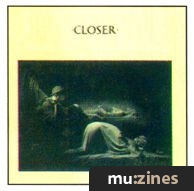
AThe short answer is they used both an Omni and a 2600 on Closer, plus a bit more besides. Here's Bernard Sumner, quoted in MT's previous incarnation Electronics & Music Maker in March 1985: "The keyboards on Closer were basically a Sequential Circuits Pro One, a Powertran Transcendent 2000 and an ARP Omni - in fact, mostly the Omni. It was good, but you had to process it, like we used to put it through a graphic equaliser and split the bands up. We put it through a Marshall Time Modulator as well, to get that 78 record effect - speeding up and slowing down the way a Mellotron does." He then goes on to say: "On parts of the album - 'Decades', for instance - there are percussion sounds from an ARP 2600 being run from an ARP sequencer, electronic bass drum sounds and stuff."
This means it's going to be cheaper to re-create the string sounds than the percussion, since the Omni will cost about £150 and a good price for the 2600 is £1300! The ETI was a UK kit synthesiser, so it might be worth checking out the DIY electronics magazines and placing a wanted ad. It was a kit designed for Electronics Today International (ETI) magazine by Tim On, many of whose designs were manufactured as off-the-shelf synths by companies such as Maplin and Transcendent (makers of the 2000 mentioned by Barney). These keyboards may therefore offer something 'closer' (seamless, isn't it? - Ed) to ETI prototypes than anything else. Of course, synths made from kits can be pretty unreliable, so don't pay too high a price if one turns up.
By the way, there's no such thing as an Omni 12: two versions were made, known as the Omni and the Omni 2 (although neither had anything other than just 'Omni' printed on the casing). Which of these features on Closer is not clear, but the differences are more subtle than radical. See this month's 'A-Z of Analogue' for the full brief on the Omni, and look out for our second-hand synth-hunter's buyer's guide - coming soon. Phil Ward
QCan you please help me with the address and phone and fax number of the company d2d Systems which is producing soft and hardware for the Atari Falcon for hard disk recording? As I want to sell their products in West Germany I am in urgent need of their address but nowhere can I get it.
Please, perhaps you can help me. I think also your magazine should report on the products they offer for the Falcon hard disk recording. Hope to hear from you soon.
Clemens Anderl
High Tech Import
Munich
Germany
ANo sooner said than done. You can read a full report on d2d's dired-to-disk software for the Falcon in last month's issue (available from our mail order department). Contact details are: d2d Systems Ltd, (Contact Details). Ian Waugh
QI have recently bought a second-hand Concentrate MG-1 Synthesiser made by Moog Music for Realistic. It has two independent oscillators and full polyphony, a sort of Rogue with knobs on. Please give me a brief history of what it is and how rare/common it is, as I have never heard of it before.
Also, how about printing, or publishing separately, an antique buyer's guide one of these days?
Steven Norgate
Kidderminster
AConcentrate? Sounds like a fruit juice! The two oscillators on the Rogue were not fully independent - they shared the waveshape and basic pitch range (although they could be tuned independently). But full polyphony? Never! The Rogue was monophonic and dates from 1981, when even an 8-note polyphonic instrument would be rather expensive.
They sell Realistic stuff in Tandy stores, don't they? - great for overpriced, obscure leads and connectors but hardly a haven for musical gear. Still if you have got a synth with full polyphony you've got a good deal! I'll pass this letter on to our vintage synths expert Peter Forrest (he's on holiday at the moment) to see if he can throw any light on it. In the meantime, if any other reader has an MG-1 we can put you in touch and you could start a club.
As for an antique buyer's guide, you will have already spotted, I'm sure, our A-Z of Analogue' series, which positively brims with "antique" synths, as you so charmingly refer to them - with a separate buyer's guide coming soon. Ian Waugh
QIn the August issue there is a Chronologie offer, with a prize of a free copy of Conductor Of The Masses, the Jean Michel Jarre magazine. Could you please let me know where this magazine is available from, and any other details?
D.G. Sidebottom
Oldham
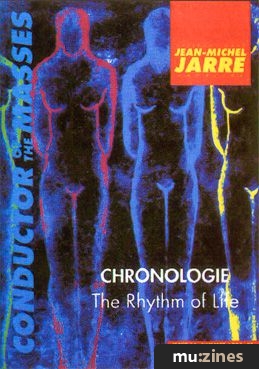
AConductor Of The Masses is published quarterly by Conceptual Publishing, and exists to document Jarre's worldwide activities in detail. Established three years ago, its blend of record and concert news, interviews, special offers and rare photographs is available and read in over 25 countries. To subscribe for one year, send your name and address and subscription fee to International Jean Michel Jarre Magazine, (Contact Details). Fees are £9.00 for UK residents, £10.00 for the rest of the world. Payment can be made by a cheque drawn on any UK bank, UK cash, postal orders, Eurocheque or International Money Order, all made payable to 'Conductor Of The Masses Magazine'. You can also obtain further information by telephoning (Contact Details). Phil Ward
PS. We apologise for the typo in the Paris concert question - it should, of course, have read July 14th 1990.
More to the point, most questions involve a degree of research - books, magazines, manuals, massage parlours, phone calls and so on - so many queries couldn't be dealt with on the spot anyway. Contrary to popular belief, we don't know the answer to everything. We answer as many as we can as quickly as we can through these pages, to which end we appreciate written queries - help us to help you and all that.
Publisher: Music Technology - Music Maker Publications (UK), Future Publishing.
The current copyright owner/s of this content may differ from the originally published copyright notice.
More details on copyright ownership...

Music Technology - Sep 1993
Help Support The Things You Love
mu:zines is the result of thousands of hours of effort, and will require many thousands more going forward to reach our goals of getting all this content online.
If you value this resource, you can support this project - it really helps!
Donations for June 2026
Issues donated this month: 0
New issues that have been donated or scanned for us this month.
Funds donated this month: £0.00
All donations and support are gratefully appreciated - thank you.
Magazines Needed - Can You Help?
Do you have any of these magazine issues?
If so, and you can donate, lend or scan them to help complete our archive, please get in touch via the Contribute page - thanks!
Please Contribute to mu:zines by supplying magazines, scanning or donating funds. Thanks!
Monetary donations go towards site running costs, and the occasional coffee for me if there's anything left over!

 @mu_zines
 RSS Feed
 Blog
Blog