Trigger Converter for the Yamaha SPX-90
Electronics / Build, Maintenance / Repair / Modification
(HSR Jul 86)


Magazine Archive
Home -> Magazines -> Issues -> Articles in this issue -> View
Hot Rodding an MM Mixer | |
Article from Home & Studio Recording, May 1985 | |
Give your old MM desk a new lease of life as a recording mixer with a few simple mods.
Though they are no longer in production, there are still great numbers of these mixers in circulation and although they were originally designed for PA work, these versatile little machines can be easily adapted for use with 4 or even 8 track recorders simply by the addition of a few extra sockets.
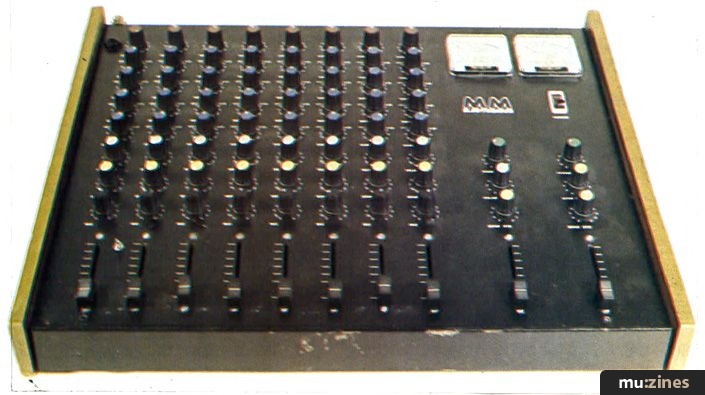
The basic MM design may not be the most sophisticated in the business, but it does offer a reasonable (if not quite state-of-the-art) noise performance and a useful four band EQ section on each input channel. Many people started their recording life with these mixers and often, when the time came to trade them in, this was done, not necessarily because of their sound quality, but because recording enthusiasts needed a mixer with more recording orientated facilities. Probably the most useful modification is the fitting of direct output sockets to some or all of the channels, and Figure 1 shows how these would be used when recording.
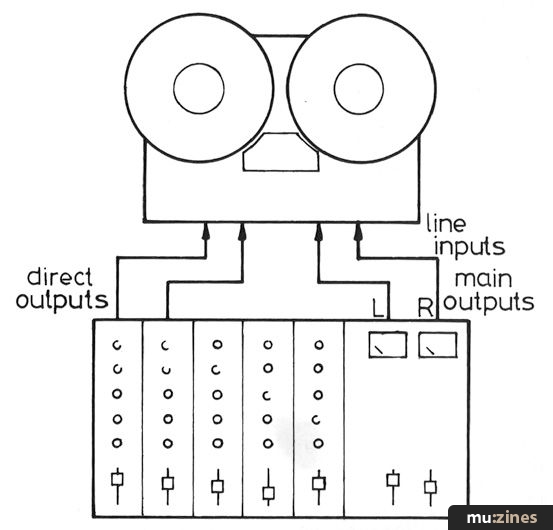
Figure 1a. Using the direct outputs.
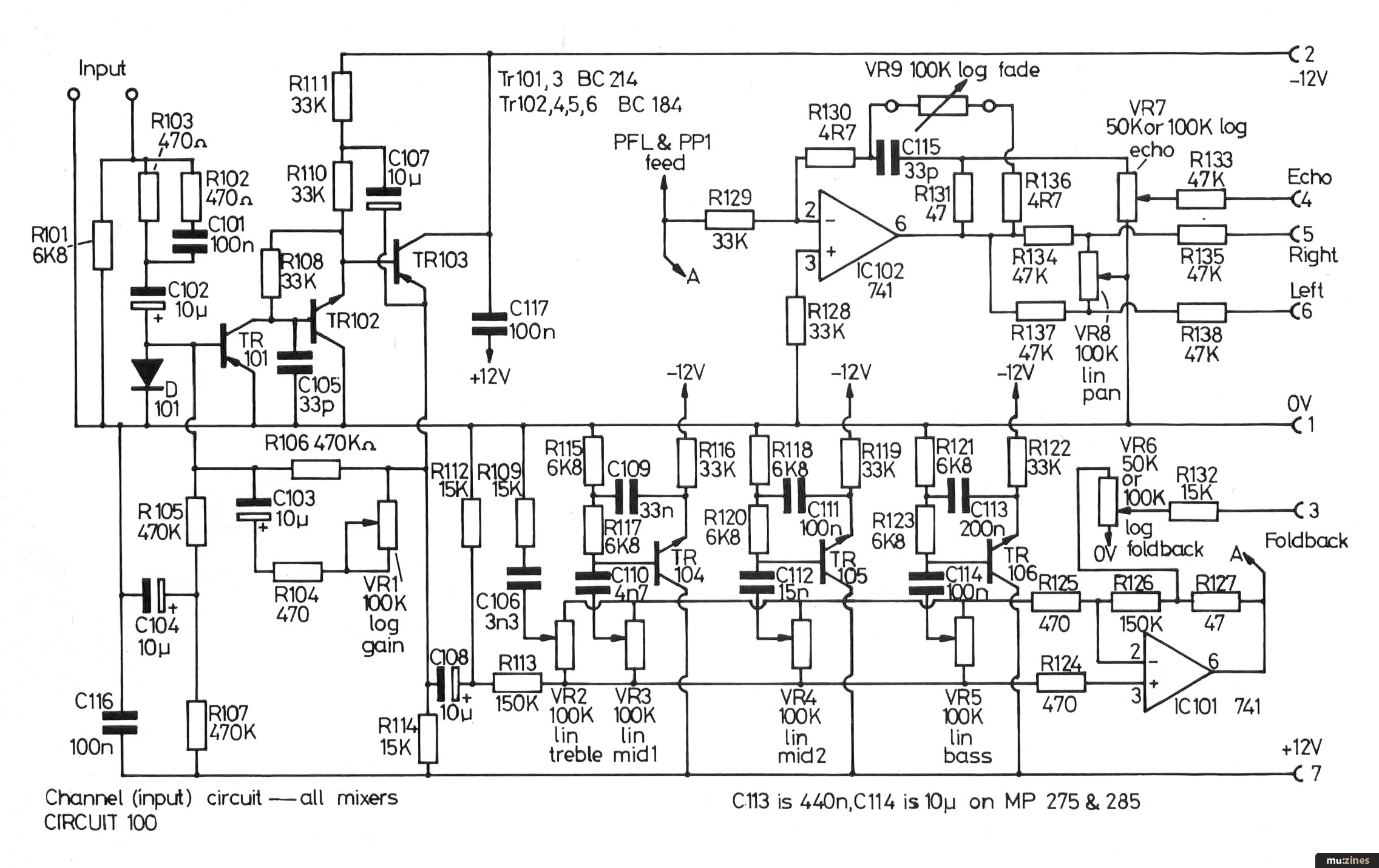
Figure 1b. MM input channel.
(Click image for higher resolution version)
Because it is often necessary to mix, (for example) a guitar which may end up on a track of its own on the multitrack, there is no point in routing that signal through the entire mixer. The proposed direct output mod effectively isolates one channel of the mixer so that it can function as a single channel pre-amp through which an input may be processed before being fed directly into one input channel of the tape recorder. Of course the two main mixer outputs can be used with the remaining mixer input channels to carry two mono submixes or one stereo mix for things like drum kits or keyboards where more than one sound source must be mixed onto one track.
Insert points for the connection of effects to individual channels are also very useful additions, as are channel mute switches, and both these mods are easy to fit. The beauty of the MM Mixer in this respect is that there is actually enough room on the front and back panels to fit these modifications, providing that minijack sockets are used for direct outputs. Mute switches are best positioned next to the channel faders, and as far as the insert points are concerned, the only available panel space is on the front between the last input channel and the master output controls, or before the first mixer channel. It would be reasonable to fit at least eight standard jack sockets in either of these positions and whilst it is not ergonomically ideal, it's still a vast improvement over being without the facility.
Direct Outputs
Having given some thought to this subject, the best approach seems to be to make a connection to the wiper of the foldback pot. The mute switch or channel fader can then be used to isolate the channel from the main mixing bus, thus leaving the foldback control available to adjust the signal level fed to the recorder. In some ways it would have been nice to be able to use the master fader, but this involves cutting tracks on the pcb and fitting a normally closed switched mini jack. As this will not be beyond the scope of at least some of our intrepid readers, Figure 2 illustrates both options. Using the second option does mean that the channel is isolated from the rest of the mixer automatically when a jack is plugged into the direct out socket, but the echo and foldback controls still operate normally and so should be set at minimum. If I were me (and I've been told that I might be), I'd go for option one. Note that in both cases I've included a coupling capacitor.
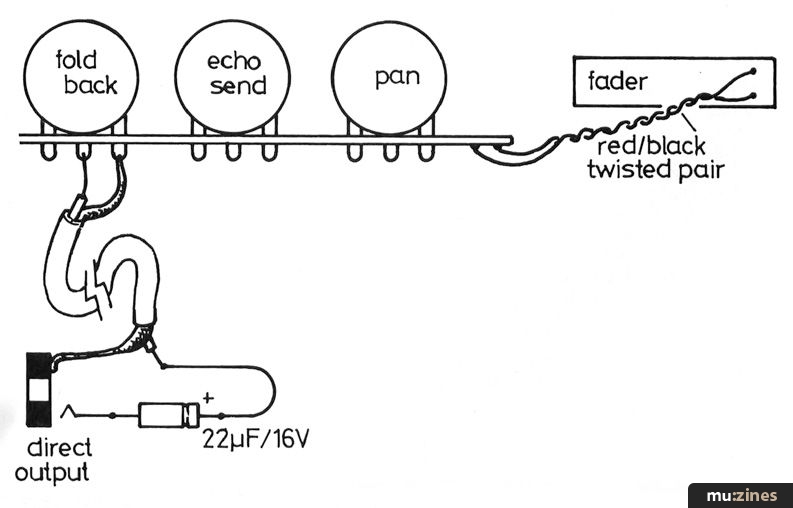
Figure 2a. Direct output from foldback control.
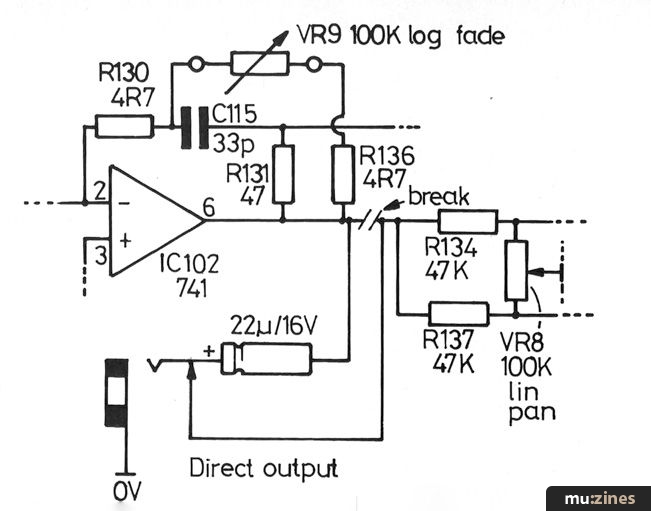
Figure 2b. Alternative direct output option.
Insert Points and Mute Switches
These are useful for connecting compressors or noise gates and I have adopted the stereo jack system where the tip of the jack plug carries the send signal and the ring carries the return. When no plug is inserted, the channel continues with business as usual.
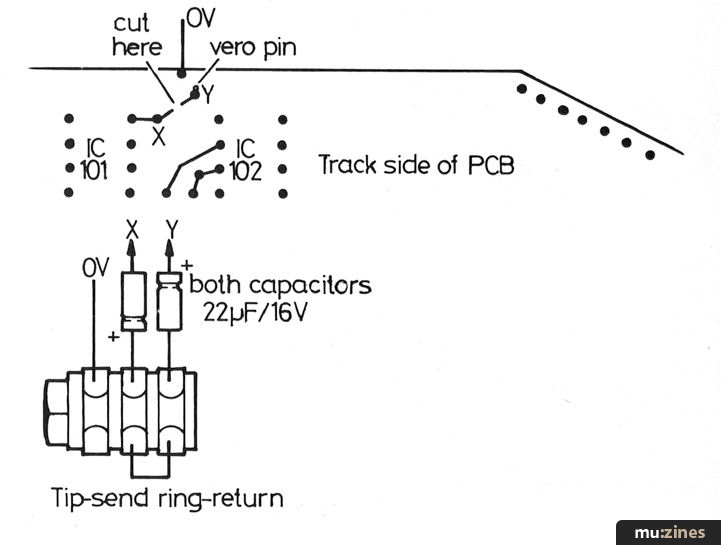
Figure 3a. Fitting an insert point.
Referring to the overall channel diagram, (Figure 5), the break is made where R129 joins point 'A' and the physical location of the mod is shown in Figure 3a. Again coupling capacitors are fitted so that any DC offset present in the external processor will not upset the mixer. The pcb track can be cut with a Stanley knife (or something similar) and the connections made with screened cable.
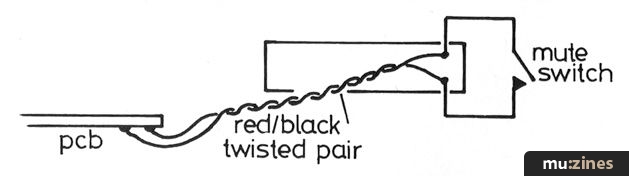
Figure 3b. Fitting a mute switch.
Muting switches are easy to fit - simply wire a miniature toggle switch across the channel fader terminals as shown in Figure 3b. Physically the switch can be located next to the fader on the front panel.
Practically Speaking
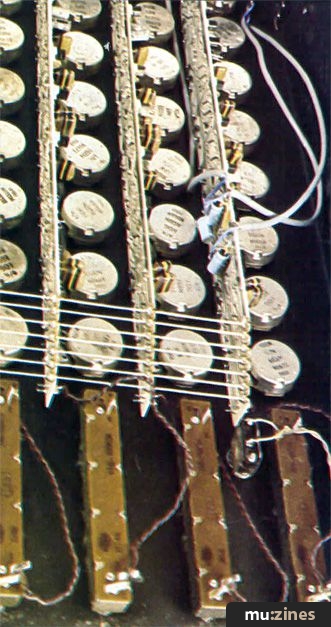
None of the mods mentioned here are beyond the capabilities of anyone who can solder neatly and take reasonable care. Drilling the holes may frighten a few people off, but if you follow the old adage of measuring twice and cutting once, you'll manage. I tend to mark out the hole positions on masking tape after having double checked that there's room for the socket or switch on the other side and then lightly centre punch the hole centres to prevent the drill from wandering. Put a piece of scrap wood behind the area of panel that you are drilling and cover the circuitry with a cloth to stop swarf getting into the works. Drill a small pilot hole first and select a low speed setting if using a power drill. Before proceeding further, it's worth using a vacuum cleaner and nozzle to ensure that there are no foreign particles left inside.
Mini jacks and mini toggle switches need a quarter inch (D) hole whilst standard plastic jack sockets require a seven sixteenths of an inch hole, and if your holes come out triangular - don't worry, so do mine! But once the switch or socket is fitted you can't tell the difference. A useful trick is to put a band of Gaffa tape round the drill bit to prevent it going too far through the panel and restyling your circuit boards.
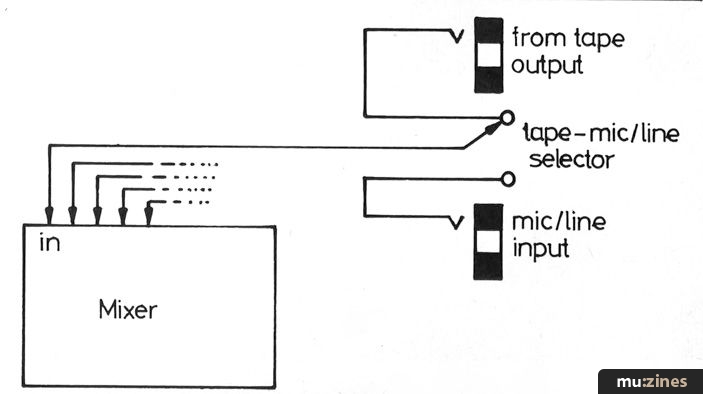
Figure 4. Record/remix switching.
Remix
There is no room on the back panel to fit sockets to accomodate the multitrack recorder outputs which obviously have to be catered for somehow. If you have a four track machine and plenty of mixer channels, you can probably afford to leave four permanently committed to tape monitoring, but if you have too few mixer channels or if you have an 8 track machine, this may not be a practical solution.
If this is the case, the simplest solution is probably to bring some of the mixer inputs up to a patchbay and fit changeover switches to select tape or mic/line input. Figure 4 illustrates one way of implementing this arrangement and the patchbay kit marketed by Powertran could easily be adapted to this purpose.
It is possible to do even more ambitious mods to the humble MM Mixer, such as fitting pre-fade listen or even extra auxiliary sends, but both these involve the building of extra circuitry and so are beyond the scope of this article. However, if there is sufficient interest in the subject of modifying mixers, we shall no doubt investigate these possibilities in future issues.
MM Mixers and spares can still be obtained from Curley Music, Liverpool.
More with this topic
 |
 Amp Airs - Amp Facts |
 Confessions - ...of an English kit builder. |
 Modify Your "Phlanger" - for Lower Noise |
 Workbench - Modifying The Midiverb |
Doctor Mains - Breakdowns... |
 Assaulted Batteries |
 Line-Up - Auto-line up: methods and machines |
 Spotlight - SERVICING THE MIDWEST |
 String Attention |
 Keyboard Matrix Interface For EK-3 |
 Frequency Divider - Turns Gnome Into "Super-Gnome" |
Browse by Topic:
Maintenance / Repair / Modification
Publisher: Home & Studio Recording - Music Maker Publications (UK), Future Publishing.
The current copyright owner/s of this content may differ from the originally published copyright notice.
More details on copyright ownership...

Home & Studio Recording - May 1985
Donated & scanned by: Mike Gorman
Feature by Paul White
Help Support The Things You Love
mu:zines is the result of thousands of hours of effort, and will require many thousands more going forward to reach our goals of getting all this content online.
If you value this resource, you can support this project - it really helps!
Donations for September 2026
Issues donated this month: 0
New issues that have been donated or scanned for us this month.
Funds donated this month: £0.00
All donations and support are gratefully appreciated - thank you.
Magazines Needed - Can You Help?
Do you have any of these magazine issues?
If so, and you can donate, lend or scan them to help complete our archive, please get in touch via the Contribute page - thanks!
Please Contribute to mu:zines by supplying magazines, scanning or donating funds. Thanks!
Monetary donations go towards site running costs, and the occasional coffee for me if there's anything left over!

 @mu_zines
 RSS Feed
 Blog
Blog