


Magazine Archive
Home -> Magazines -> Issues -> Articles in this issue -> View
Article Group: | |
Book Reviews | |
Jazz-Rock Fusion, Movement of Jah PeopleArticle from Sound International, June 1979 | |
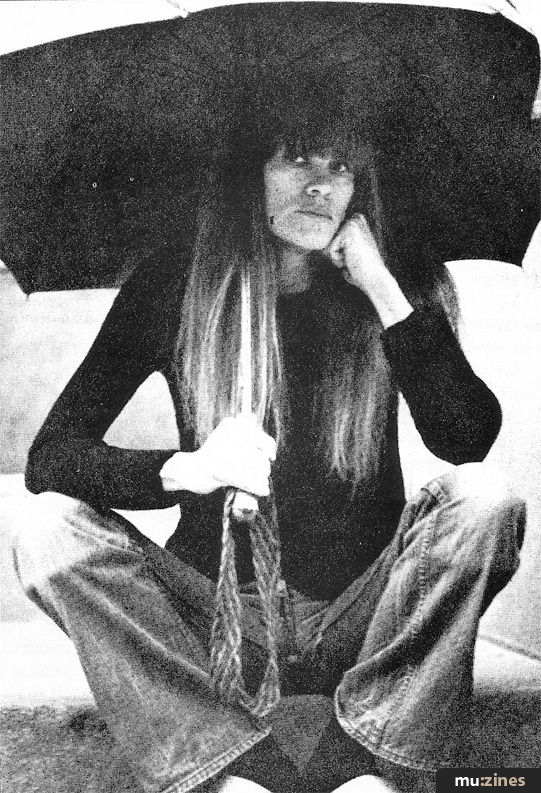
Jazz-Rock Fusion — the people, the music by Julie Coryell and Laura Friedman is a reasonably accurately titled softback book that is well worth dipping into. The structure offered provides a splitting of featured musicians into categories of instrument played, from Bass to Woodwinds, and gives a short interview (from Coryell) with each, along with a prefacing background Blurb. Photos throughout are seen through the eye of Friedman's lens and vary in quality. Information and insight are undeniable, however, and this aspect is heightened by an extremely thorough discography at the back of the book. Coryell claims that, 'This book strives to document some of (the) people in jazz who had a hand in shaping the course of music from the late sixties through the late seventies,' and in this course it succeeds admirably. Published in UK by Marion Boyars, £6.95, ISBN 714526673. Hardback version available later in '79 at £9.95.
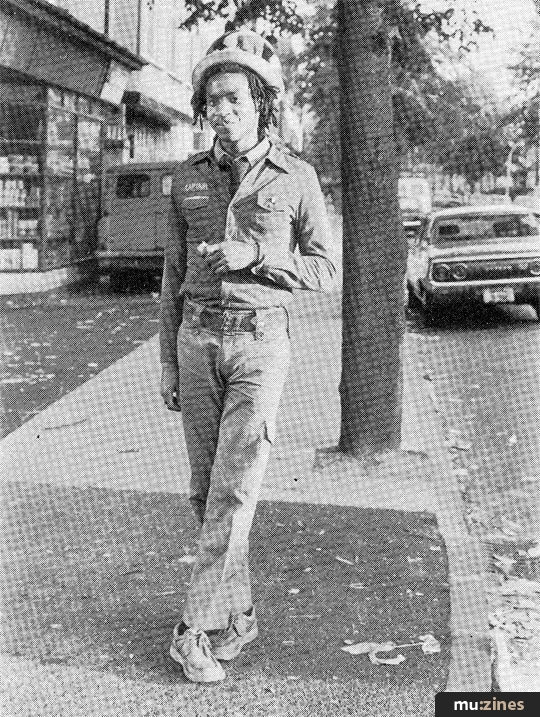
Movement of Jah People by John Plummer with additional material by Derek Bishton and Brian Homer. Taken from Bob Marley's Exodus album, the title of this new book on Rastafarians expresses the feeling of hope and purpose which characterises the philosophy of the Rasta cult. One chapter, The Sounds of Rastafari, is of particular interest. It traces the roots of reggae — the only musical art form to have grown up in Jamaica in the last decade. Author, John Plummer, explains: 'Reggae does not have a very long history; indeed it is only in the last, 20 years that indigenous popular music has developed in Jamaica at all.'
Previously Jamaican music meant either a background soundtrack for tourists in a tropical paradise or a Jamaican form of calypso music called mento, which was derived from ethnic folk. Its effects were not far-reaching.
By the late 50s, the American R & B of Fats Domino, Sam Cooke, the Drifters and Ray Charles set the tempo. Then the sound system took off. It was the poor man's discotheque that became the main outlet for popular music for a whole generation of Jamaicans. The system enabled DJs to introduce records, speaking over the first few bars. This was soon extended to recording voice-overs on top of a backing track. As it was essentially dancing music there had to be a pronounced rhythm, hence the heavy emphasis on bass.
Reggae itself emerged as a combination of American R & B, memo and other native musical forms, with a distinctive reversed beat called 'ska'. The early 60s saw the great rise of reggae with its stars Jimmy Cliff, Toots Hibbert and Bob Marley. And where did the name 'reggae' come from? Well, you'll have to read the book!
Published in UK by PressGang Community Publishers, £1.80. Over 30 photographs and drawings.
Publisher: Sound International - Link House Publications
The current copyright owner/s of this content may differ from the originally published copyright notice.
More details on copyright ownership...
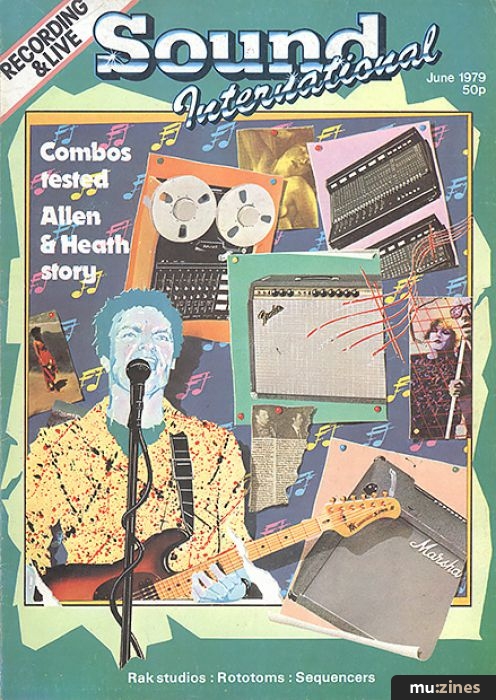
Sound International - Jun 1979
Donated & scanned by: David Thompson
Sound Reports & Views
Review
Previous article in this issue:
Next article in this issue:
Help Support The Things You Love
mu:zines is the result of thousands of hours of effort, and will require many thousands more going forward to reach our goals of getting all this content online.
If you value this resource, you can support this project - it really helps!
Donations for June 2026
Issues donated this month: 0
New issues that have been donated or scanned for us this month.
Funds donated this month: £0.00
All donations and support are gratefully appreciated - thank you.
Magazines Needed - Can You Help?
Do you have any of these magazine issues?
If so, and you can donate, lend or scan them to help complete our archive, please get in touch via the Contribute page - thanks!
Please Contribute to mu:zines by supplying magazines, scanning or donating funds. Thanks!
Monetary donations go towards site running costs, and the occasional coffee for me if there's anything left over!

 @mu_zines
 RSS Feed
 Blog
Blog