How It Works - Tape Machines (Part 1)
Sound Fundamentals, Tape, Vinyl, CD, DAT
(SOS Feb 87)


Magazine Archive
Home -> Magazines -> Issues -> Articles in this issue -> View
R-DAT: A Tape Revolution? | |
Article from Sound Engineer and Producer, November 1986 | |
A special two section feature that examines the technical specifications and the marketing implications of the latest domestic and professional digital recording system
R-DAT: THE TECHNOLOGY AND WHAT IT MEANS TO THE PROFESSIONAL
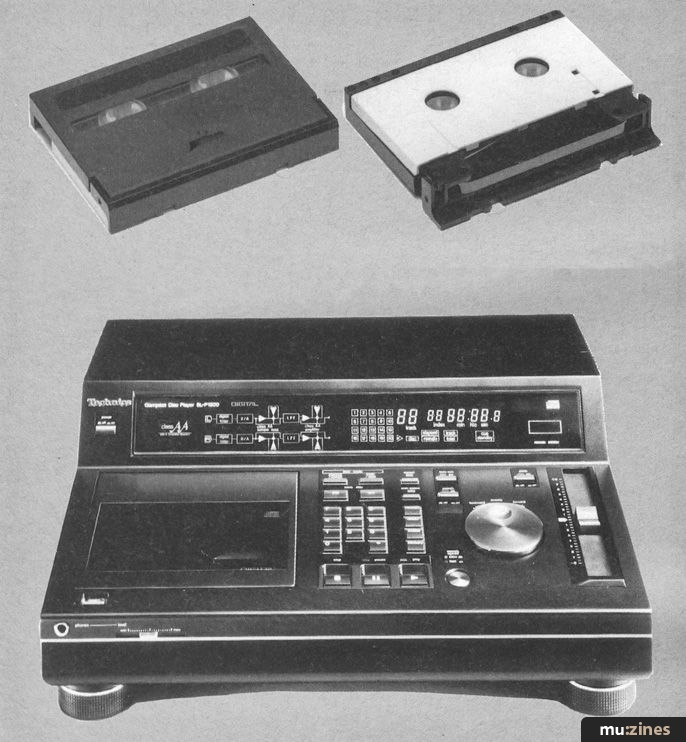
The battle commences: R-DAT cassette above, set to battle with state-of-the-art compact disc units, and the "old" faithful vinyl solution (bottom) in the domestic market.
As I write, it is possible that the Japanese may be questioning the wisdom of developing a product which, in essence, may serve both professional and domestic audio industries.
In theory and on paper it is hard to fault such an idea; shared development costs, common components, less production lines, bulk sales on the one hand to offset smaller quantities of professional sales, etc., etc... Great. Enter the European record industry, riding high on the success and growing sales of Compact Disc, anxious to protect its interests, probably two or three years behind the Japanese as ever, and realising only just in time that they are planning to spring R-DAT on them, in both domestic and professional forms, within a few months.
It is a sad fact that due to the size of enormities like PolyPhiliDeccadoragram, the hardware manufacturing arms (who might make the players, the tape, etc.) rarely get to discuss things with the record industry arms, and although the former were involved in all the DAT standards meetings, the latter have only recently become aware of this threat to its prosperity.
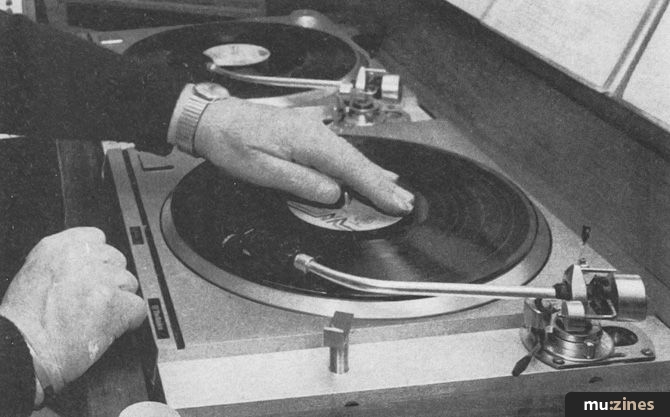
Just why it is seen as such a threat is not what I am about to cover here, but the background is a key factor in determining whether we in the professional audio industry will see R-DAT recorders for studio purposes sooner or later.
The big question is "can you release one before the other?", and the answer would obviously be a lot simpler if we were looking at two different products. Clearly the problem lies in the fact that machines to be used for domestic purposes differ in only a few key areas from those aimed at the professional market, and in the following paragraphs I will attempt to show where those differences lie, and to assess the potential of this recording medium for the studio.
HAVE YOU HEARD THIS BEFORE?
Perhaps you're thinking "they ought to have learned from the PCM-F1", another domestic product which unintentionally found its way into the pro-audio market, giving digital audio recording to the masses at relatively low cost. Well in a sense they have learned; the PCM-F1 and its cronies sampled at 44.1kHz, ideal for making CD masters which were easy to transfer to the professional mastering system without any sampling rate conversion, loss of bandwidth, and so on.
The PCM-F1 and 701 were also very nicely made, so that their appearance in a professional studio would not look out of place, lending themselves to various "pro" modifications which would give them balanced inputs, BNC connectors, studio input levels and a digital interface for making that all-important transfer to big-brother 1610.
R-DAT, on the other hand, has been considered perhaps a little more closely in the light of such practices.
We will most probably find that domestic models have been given a recording sampling rate of 32kHz, which affords a total audio bandwidth of about 15kHz, compared with that of the CD (sampling at 44.1kHz) which gives up to 20kHz bandwidth. Alongside this, and perhaps this is where the European CD manufacturers are beginning to hear vague rollings of the death-knell for sales of CDs, we find that domestic machines are to be given a replay-only sampling rate of 44.1kHz, facilitating the replay of pre-recorded music software, for the obvious reason that it is easier to make direct digital transfers from professional master tapes at this sampling rate at the duplication stage.
Professional machines could operate at any of the following sampling rates: 32kHz, 44.1kHz, 48kHz, perhaps limited in most cases to the latter two, with the first one having most appeal in broadcast systems where 32kHz sampling rate forms the basis of a number of transmission lines (15kHz is the current bandwidth of FM radio).
The results of such an approach would be these:
• Domestically, you would be able to record anything you like (including CDs, if you feel happy breaking the law) at 32kHz sampling rate, through analog inputs. The bandwidth would be limited to that of current FM radio (not as good as CD).
• The quantization used in domestic machines would be 16-bit for the 44.1kHz, replay-only option, but might be either 16 bits linear or 12 bits non-linear (giving longer playing time but slightly more distortion) for the 32kHz recording version. I am not certain which of these will be most common yet.
• Domestic machines would not really be any use for professional recording, precisely because of the 32kHz, sampling rate. It is possible that they may find a place in journalism for radio sound, considering that the bandwidth is adequate, and that professional studio machines may be able to replay tapes of any sampling rate.
• Professional recorders would use 16 bit quantization (are they sure that this is enough for the "all-digital studio" which may work with 18 or 20 bit consoles?), and would be provided with all the bells and whistles to make the machine into a professional tape recorder.
• The professional sampling rate in general use might unfortunately be limited to 44.1kHz, due to the need for digital transfer to CD and pre-recorded R-DAT tapes, although over-sampling convertors can make this perfectly acceptable to the ear. Such a sampling rate would also make possible the playback of studio work tapes on a domestic machine: great for the hard-working producer.
R-DAT, DASH, PRODIGI, HARD DISKS...
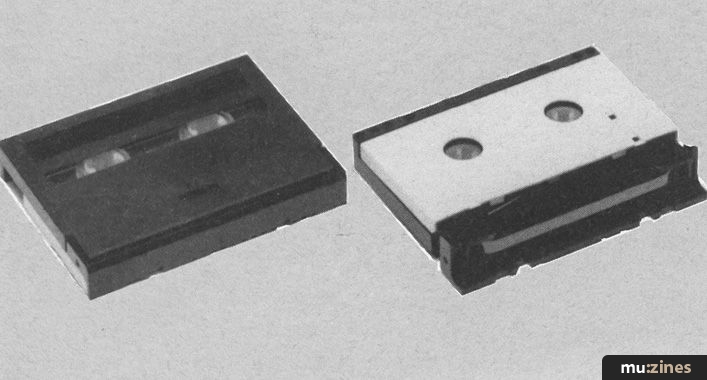
TDK's domestic R-DAT cassette, above, previewed at the 1986 IBC show in Brighton.
I would hate to own a studio right now. I would also hate to be a manufacturer trying to persuade the naturally nervous customer that he really is doing the right thing by buying my new product which is the be-all and end-all of digital recording.
This problem has never occurred before in such magnitude, it makes the relative safety of your old analog tape recorder rather attractive (especially with a fancy new noise reduction system which sounds as good as digital, whoops... naughty... ). In such a situation it is only possible to point out what, in my opinion, are the features of R-DAT which might make it suitable for studio use, and where it falls down; it is, after all, a format with over 80 signatories (many more than the other digital recording formats) although I suspect that most of these are signing up to produce domestic machines.
STEREO AND MULTI TRACK
Professionally, a single R-DAT machine is only intended to carry two channels of audio, domestically there is a four channel option with half the playing time. Clearly, the only way you're going to turn R-DAT into a multi track tape recorder is by synchronizing as many as you want together (which is technically possible) and using some form of overall controller.
Whether or not you would be happy to carry 24 cassettes around with you when going to another studio for mixdown is entirely another matter: they probably wouldn't be any more bulky than two reels of two inch tape, but I can just imagine the cries of anguish: "I've lost the lead vocal cassette", and so on!
One advantage of a number of synchronised R-DATs would possibly be found in picture dubbing, where it is often necessary to slip tracks in time against one another, and this is one reason why multi track tape recorders have so far been almost non-existent in these situations, but it seems that other neater methods using random-access recording on disks may be gaining favour for this purpose.
TIMECODE SYNCHRONISATION
Having just mentioned locking a number of machines together, it is worth pointing out the ease with which an R-DAT machine might be synchronised.
It is not tied to a video format, and all the parts have very low inertia which makes for a fast locking time. Professional machines will allow for timecoding facilities, probably recording the code on one of the analog edge tracks of the R-DAT tape (for which the quality of the track would probably be reasonably adequate). Such facilities would make the machine an ideal accompaniment to ENG video cameras, as the Nagra has been to film cameras.
EXTRA INFORMATION
R-DAT has a large capacity for subcode data; this is non-audio information which can be used for a variety of purposes, and which, in the case of R-DAT, may be recorded separately from the sound, although in the same helical scan by the same head. This is made possible by allowing the head to record just a small portion of a helical scan if necessary, leaving the rest untouched.
Compared with Compact Disc's subcode rate of just under 60kbits/second, R-DAT can cope with 273.1kbits/second, which opens the door for professional users to store things like text, location labels, cues, reel numbers, song titles, control information, and much more along with the music. None of the currently existing professional digital audio formats cater for anything like this amount of "information space", and it could be that this will be one of the key factors in securing R-DAT's place in the studio: a few moments thought will probably be sufficient to see what a large number of uses could be found for this data area, especially when it can be recorded separately from the main program.
EASY EDITING?
Yes and no, of course. In many ways editing with R-DAT will prove very fast and flexible, not least because you can zip up and down the tape in fractions of a second to find distant takes. It is still important to realise, though, that R-DAT editing will still be "copy-editing", in other words it will involve the assembly of a master tape by copying sections one after the other from a series of source takes. Although electronic editing of this sort is very easy, allowing rehearsals, variable crossfades, gain changes, and all the other good stuff, it is still an absolute pain when it comes to the insertion of something in the middle of an otherwise perfect recording.
As you will know, if you've ever done any editing on a CD mastering system, this means copying everything after the edit all over again in real time, which is especially annoying if you've inserted something right at the beginning of an hour long recording. In a commercial environment where speed is of the essence, something would have to be done to improve this situation, especially for broadcasting purposes where short deadlines pervade.
I have heard that it may be possible to institute some form of higher-speed copying facility on professional machines, which might amount to something like eight times normal speed, and this would alleviate the problem considerably. We shall see.
In the meantime, it is difficult to make up one's mind between the rather dubious virtues of splice editing digital tapes (provided by PD and DASH formats) which give all the ease found with analog editing such as easy insertion, etc., and the security provided by electronic editing with cassettes, having facilities such as those already described.
SOFT MACHINES
It is a great pity that wrangles over the future of R-DAT as a software medium may adversely affect its success as a professional recording medium, although one might say "it serves them right for assuming that they could walk all over the Europeans, and for shooting themselves in the foot by bringing out a product which directly challenges other products, which they still profess to want to sell." No-one could really blame you if those are the thoughts that immediately spring to mind!
R-DAT: DUPLICATION, AND ITS POTENTIAL IMPACT ON THE RECORDING INDUSTRY
Originally conceived simply as a digital equivalent to the compact cassette, Digital Audio Tape has taken on a significance far greater than that accorded by this original role.
Instead, it has become the focus for a variety of disagreements the music/hi-fi industries of the West have — or would like to have — with the Japanese. Behind this emotionally charged atmosphere some interesting events are beginning to re-shape DAT's future before it has happened. This is a look at the situation to date.
Although under development for many years, only recently have the broader implications of DAT's launch become obvious. The most controversial so far seems to be my own assertion, made in a Sunday Times article, June 29 1986, that the system will replace Compact Disc. However, the argument is widening daily and now even this has become just one more piece in an expanding scenario that includes the possibility of EEC tariff barriers, a software embargo and even DAT manufacture in the UK or Europe.
HOME TAPING AND PIRACY
The earliest objections to DAT came from captains of the music industry such as Bhaskar Menon, Chairman of Capitol-EMI Industries worldwide, and Jan Timmer, head of Polygram International. Both have strongly condemned Japanese manufacturers for their intention to introduce DAT prior to talks being held over the issue of home taping.
The subject both want to raise with the Japanese is fitment of spoiling equipment to the hardware. They feel that DAT's potential recording quality will transform home taping from an infection into a plague. The preferred solution is some sort of anti-copying system, even though historically such devices have been as prolific and unsuccessful as perpetual motion machines.
However, the IFPI (International Federation of Phonogram and Videogram Producers) met with an EEC Commission delegation during June 1986 to discuss "the major threat to intellectual property rights" posed by the ability of DAT "to make perfect copies of digital copyright material such as Compact Discs," as they put it. During this discussion a demonstration of the CBS Copycode System was given, "a copyright protection device which might be incorporated into digital audio equipment to prevent unauthorised copying of music software on digital audio tape". EEC officials are, however, reported to be sceptical about the success of such a system in practice.
As Francis Rumsey observes in his complementary article on DAT technology direct digital copying is not the issue, since it has been frustrated by the adoption of different sampling rates for recordings made on the machines (48kHz) and commercial pre-recorded tapes made external to it (44.1kHz). This makes large scale pirating of tapes, using direct digital transfer unlikely, so home taping is the industry's concern. "More than six times as much music was acquired by copying than by legitimate purchase" according to the BPI's research.
DAT DUPLICATION
My own contention — that DAT will kill off Compact Disc — takes the argument into the realms of DAT duplication which, before it has even started, is threatened with an embargo! This is because the pre-recorded DAT cassette tape is rightly perceived as a dangerous animal.
It's an almost universally held belief that tape recorders and record players are "complementary media." Everybody quotes this one to me; I have a thick file full of letters, from Sony through to EMI through to other journalists, all making the assertion. Whilst simple observation might suggest this is the case, facts do not.
Sales of LPs have been in decline since 1978, whilst those for pre-recorded musicassettes have been climbing steadily, exceeding LP sales during 1985 (LP = 53 million units, cassette = 55.4 million units according to BPI figures). This event took place a year earlier in the USA, believe it or not, even though they took to the compact cassette well after Europe. Similarly, Laservision never got a look in when launched after video cassette recorders.
The lesson here is that whilst cassette players and record players may be seen alongside each other, that does not mean they are complementary. Quite the reverse: tape playing is replacing disc playing.
The reason is quite obvious. A tape player does the job of a record player, i.e. it is a replay machine, and it can make recordings. It is a dual-role device, whilst all disc players are single-role devices. The answer to all those who wonder where recordings will come from when disc players die out is already being presented to us by the buying public. Dubbing decks have become embarrassingly popular, in spite of their poor quality. People are taping their tapes.
This background underlines the potentially crucial role the pre-recorded DAT tape will play in the future — and why it is becoming controversial before it even exists. It is the pre-recorded DAT cassette that, because of its CD sound quality, I believe consumers will take to in droves, providing the price is right. With up to two hours of playing time in a very robust, totally enclosed "armadillo" package that at 10mm x 73mm x 54mm is roughly half the size of a current cassette, pre-recorded DAT obviously has the drop on Compact Disc. There seems no reason why it should not enjoy the popularity being enjoyed by pre-recorded musicassettes, price allowing of course. Quite what the price will be depends upon many factors, which I will outline.
The musicassette has provided some interesting lessons in music business economics and resultant policy. The LP required expensive manufacturing plant (presses, hoppers, plating baths etc), plus a large factory to house it all. Worse, LPs are bulky and heavy; they require a lot of storage space and are difficult to handle in quantity. So an LP plant with associated storage ties up a lot of capital and is expensive to run.
Compact cassettes have proved an altogether different problem. Firstly, there are optional manufacturing methods: low capital cost real time recording that is essentially slow and results in an expensive end product, or high speed duplication that requires more capital investment but produces a cheaper end product. Both methods will exist with DAT.
Initially, duplicators will almost certainly start with real-time recording, using banks of synchronised, remotely controlled recorders. The capital investment is small and start-up time very short, bringing about an early appearance of DAT tapes — but they will be expensive. A common ball-park figure being quoted is £19.
As the market shapes up, or perhaps I should say companies like Sony, Matsushita and Otari will make high speed duplicating plant available. The capital cost of such equipment is, I have been told by Sony Broadcast, unlikely to cost in excess of £1 million, giving enough capacity for economically viable production. This is far less than that required for Compact Disc manufacture, DAT mimicking compact cassette in this respect. It is similar in needing a smaller factory and far less storage than any other medium too. Mass produced DAT tapes like this will almost certainly be priced to match Compact Discs, or possibly just above them for political reasons.
Recognising the threat posed by DAT and Japan's unwillingness to discuss fitment of anti-copying devices, talk of a software embargo has arisen. Elliot Goldman, Chairman of RCA/Ariola, has been reported as saying that his company "would not license our product for DAT until a dialogue has been established." However, all the major music labels would have to act in unison, led by a body like the IFPI, for an embargo to be effective and this is always a problem. It would only take a few independents or one of the majors to opt out for the whole thing to collapse. EMI have told me, for example, that they are "not specifically against the new DAT technology" and would give pre-recorded DAT "serious consideration" when there is "sufficient demand".
The importance of small scale duplicating plants operating early on in DAT's commercial life is not to be underestimated. Jeff Kite of Stiff Records pointed out that such plants will allow small independent labels to get their acts out onto the new high quality medium straight away. The first Compact Disc plants, like Polygram's in Hanover, had its pressing capacity fully booked by the big labels Jeff told me, automatically excluding the small independents. This accounts for CD's early MOR nature.
Under these circumstances I see little possibility of a software embargo ever being successfully applied against DAT, even though it is much talked about. There's a lot of sabre-rattling going on, but I suspect the only people the troops will hurt, if they ever decide to draw their swords, is each other.
Finally, I would like to consider what the Japanese response to all this is. They have had DAT ready for launch since the 1985 Tokyo Audio Fair. Talk of postponement at the 1986 Fair by the Japanese has been greeted with glee by many people in the UK audio and music industries. However, neither I nor others who have had years of dealing with the Japanese believe this to be anything other than a smoke screen. It's only a shame that many journalists want to believe this sort of thing and willingly act as a mouthpiece for such dis-information.
It is easy for a company to declare it will not launch at the Fair, but this doesn't mean it won't launch one month later! In fact, though, people within three of the largest Japanese companies have already told me that the launch is definitely going to be by the end of this year. Product will not necessarily be available in the UK or Europe immediately though.
If the Japanese don't launch this year, it will be too late. Both Sound Engineer + Producer and myself have seen Lyric Data's all-solid state music recorder, the IXI, and have reported on it.
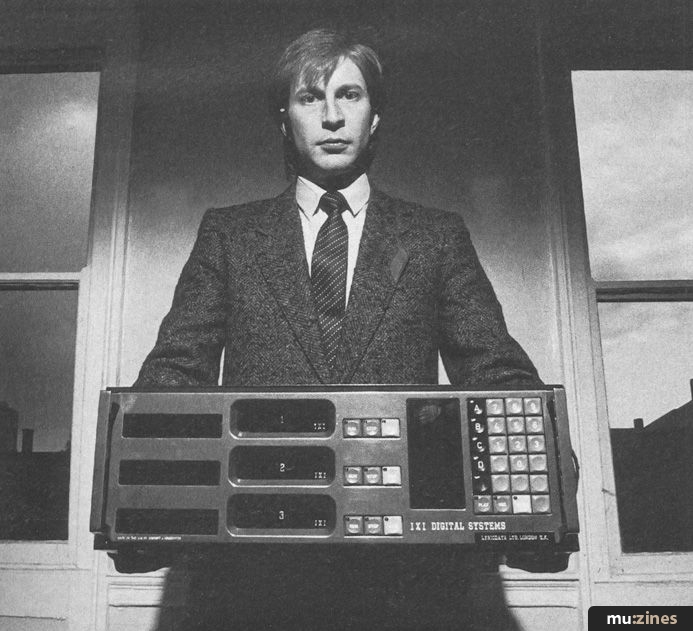
Kane Kramer cradles IXI: a solid state future?
Sceptical as ever, I took my Spectrum Analyser to the company's head office in London's Hackney area to test this thing. I proved it offers CD performance (i.e. 21kHz bandwidth, zero distortion and -90dB noise) and heard it play 16 seconds of music. O.K., this isn't much and there are problems with regard to obtaining sufficient memory capacity, which I cannot go into here. However, I have already established that the problematical manufacturing technique needed to produce sufficiently high memory density for such a machine has been perfected, at least in the laboratory. I believe that within 10 years at most — and some would say five — it will be possible to store music in ordinary computer type memory, and 'boxes of wheels', as Philip Race of Disctec described them, will become obsolete.
You can rest assured, the Japanese are also aware of such eventualities — as they also aware of the burgeoning hue-and-cry against DAT in Europe. Both severely threaten its future. The launch will have to go ahead before all the disputes about DAT — once thought of as a simple digital replacement for compact cassette — engulf it.
More with this topic
 |
 Strawberry Cutting Room |
 Tape Machines Line Up Here |
 Making Records (Part 1) |
 Clean Living |
 Care & Repair - Tape Machine Line-Up |
 Hands On: Casio DA7 DAT Recorder |
 Join The Singles Club |
 Tape Rap |
 From Studio To Street - The Story Of DAT |
 DIY Music - All You Need To Know About Making Your Own Records |
 Doing That Digital Thing |
Browse by Topic:
Tape, Vinyl, CD, DAT
Publisher: Sound Engineer and Producer - Media Week Ltd.
The current copyright owner/s of this content may differ from the originally published copyright notice.
More details on copyright ownership...

Sound Engineer and Producer - Nov 1986
Donated by: James Perrett
Feature by Francis Rumsey, Noel Keywood
Help Support The Things You Love
mu:zines is the result of thousands of hours of effort, and will require many thousands more going forward to reach our goals of getting all this content online.
If you value this resource, you can support this project - it really helps!
Donations for October 2026
Issues donated this month: 0
New issues that have been donated or scanned for us this month.
Funds donated this month: £0.00
All donations and support are gratefully appreciated - thank you.
Magazines Needed - Can You Help?
Do you have any of these magazine issues?
If so, and you can donate, lend or scan them to help complete our archive, please get in touch via the Contribute page - thanks!
If you're enjoying the site, please consider supporting me to help build this archive...
...with a one time Donation, or a recurring Donation of just £2 a month. It really helps - thank you!

 @mu_zines
 RSS Feed
 Blog
Blog