Live Sound (Part 5)
(RM Mar 93)


Magazine Archive
Home -> Magazines -> Issues -> Articles in this issue -> View
Live Sound (Part 4) | |
Getting The Best From Your LoudspeakersArticle from Recording Musician, February 1993 | |
In part four of our series on small PA systems, we look at the importance of loudspeaker positioning on stage.
This month, Paul White looks at the loudspeaker systems used by typical gigging bands and comes up with a few pointers for using them more effectively.
Last month, I looked at some aspects of loudspeaker cabinet design and made the observation that contemporary systems tend to favour the all-in-one-box, full range loudspeaker because of its predictable performance and ease of setting up. On paper, separate bass bins, mid-range speakers and high frequency horns offer more flexibility, but arranging them so that they work effectively requires a great deal of expertise, with a high potential for error when it comes to wiring up. The full-range loudspeaker, on the other hand, is built using matched acoustic components, the individual drivers are always in the correct physical relationship with one another and there is far less scope for making the wrong connection; a system with an integral, passive crossover requires just a single, two-core speaker cable between it and the amplifier, while an active system can be fed from the amplifiers via a multi-way cable terminating in a multi-pin connector at the cabinet end.
The move towards full-range speaker systems has not only influenced the gigging band market, where the whole PA needs to share the back of a van with the rest of the back line — and possibly the musicians — but also the larger concert PA market, where multiples of full-range cabinets are suspended in complex arrays, replacing the walls of floor-standing bass bins and individual cabinets so common in the '70s.
A common question asked is how much power is required for a gigging band's PA system; there's no easy answer to this, because of the various factors influencing the final choice. The amount of sound a system produces isn't only affected by the amplifier power but also by the efficiency of the loudspeakers themselves. In other words, a more efficient loudspeaker will produce more sound from the same amplifier power. Other factors to consider are the size of the venue, the amount of level required, the frequency range to be reproduced, and how much sound the back line is generating in the first place. Obviously a rock band with a large drum kit is going to need a more powerful system than a folk band. Similarly, a PA that is going to be used to amplify the drums and bass guitar is going to need more power at the bass end than a PA that's being used primarily to amplify vocals. Having said that the answer is as long as a piece of string, I would be reluctant to use a PA system with a total power of less than 600 watts with a rock band, even at small pub gigs. A folk band, on the other hand, might get away with half this power, even in larger venues.
Before moving on, just a few words about those loudspeaker specifications. You may have noticed that loudspeaker systems are given a sensitivity rating quoted in dBs per watt measured at 1m. This tells you that if a 1 watt test tone or noise signal is applied to the system, the SPL or Sound Pressure Level measured directly in front of the speaker at a distance of 1 metre will be so many dBs. This is a good measure of how effectively the loudspeaker is turning your amplifier power into sound, but beware: it doesn't tell you everything. What it doesn't tell you is what is going on away from that magical point directly in front of the speaker — what is happening off-axis. If a loudspeaker has been designed with a very tight directivity pattern so that all the sound comes out as a narrow beam, then the sensitivity figures can look very impressive — but the speaker may be putting far less sound into the room than a speaker with a lower measured sensitivity that projects the sound over a wider angle. The more meaningful figure is Efficiency, which takes account of all the radiated sound, not just the on-axis sound, but unfortunately this figure tends not to get quoted quite so freely as Sensitivity.
Sense of Direction
With separate component systems, it is all too easy to end up with a very wide dispersion at the low frequency end and a relatively narrow dispersion at the higher frequencies. The outcome is that, although the high frequencies do make it to the back of the room, they tend to sound rather honky and don't blend well with the lower frequencies from the bass bins. And, because of the narrow dispersion pattern of the horns, it is quite possible that some members of the audience nearer the front will receive inadequate coverage, as the beams of sound might miss them altogether. A high level of experience and a thorough understanding of all the variables involved is essential if such a system is to be configured properly, but much of this work is bypassed in the case of full-range speakers. However, some understanding is still necessary to position these systems most effectively, especially where multiple cabinets are being used.
"It seems obvious that the speakers need to be raised above the level of the audience, otherwise much of the sound will be directly absorbed by the first few rows of people."

Figure 1: Speaker axis parallel to the ground.
It seems obvious that the speakers need to be raised above the level of the audience, otherwise much of the sound will be directly absorbed by the first few rows of people. This isn't such a worry at very low frequencies, but when it comes to mid and high frequencies, it is most definitely true. But just standing the speaker cabinets on tables isn't making the best use of the available sound, as Figure 1 illustrates. Here you can see that the on-axis sound passes over the heads of the audience and eventually encounters the rear wall of the building. Not only does this deprive the audience of level — because they are listening to the less powerful off-axis sound — it also directs a large amount of power at the rear wall, which will echo back into the room, causing a muddy, confused sound.

Figure 2: Speaker tilted for optimum coverage.
If you were to tilt the cabinet forward slightly, as in Figure 2, the situation would be much improved. Now the on-axis sound is directed at the back of the audience, and as they're the furthest away from the speakers, this will help to provide them with a realistic listening level. Those nearer the front will hear the off-axis sound from the speakers, which isn't so loud, but because they are nearer, they'll still get plenty of level. As you can see, the nearer you get the to the front, the more off-axis the listeners are, but as they are proportionally nearer, the actual sound level is comparable with what's heard at the back of the hall. Not only does everyone get a more even sound coverage, the problem of room echoes is significantly reduced, as less sound is being directed onto the rear wall.
Now you can see why it is so important that PA loudspeaker systems are designed with an accurate off-axis response; relatively few of the audience hear the on-axis sounds! Ideally, the off-axis sounds should differ from the on-axis sounds only in level, though in real life, the bass end tends to have a wider dispersion than the rest of the audio spectrum, even in well designed systems.
"It seems obvious that the speakers need to be raised above the level of the audience, otherwise much of the sound will be directly absorbed by the first few rows of people."
Multiple Choice
If you need more level, you could just stand two cabinets side by side and hope for the best, but this invites certain problems. Imagine that these are theoretically perfect speakers with clearly defined dispersion patterns that, for the sake of argument, have their -6dB point at 15 degrees off-axis, (the -6dB point is where the measured power is exactly half what it was when measured on-axis). This figure will vary from design to design, but the manufacturer of any reputable commercial system should be able to provide you with this figure. In reality, the dispersion does tend to vary somewhat depending on the frequency, so it's best to work on figures based on the speaker's performance at around 3kHz, as this is an important part of the spectrum for speech intelligibility.

Figure 3: Speakers placed side by side.
If you visualise the sound coming out of the speakers in beams, as depicted in Figure 3, the beams will overlap, causing an addition of power at some frequencies and phase cancellations at others, due to the physical distance between the drivers in adjacent cabinets. The result is not only that you fail to double your sound level by doubling the number of cabinets, there's also a deterioration in the sound quality.

Figure 4: Speakers angled for improved power coverage.
A far better way is to angle the speakers so that they form an arc rather than a straight line; this is shown in Figure 4. The angle between the cabinets should be twice the -6dB dispersion angle of the speakers, and in our example where the -6dB point occurs at 15 degrees, the required angle would be 30 degrees. Now the coverage patterns of the speakers overlap at the -6dB point, which provides a more even power coverage and minimises the effects of phase cancellation. You can see this principle in action at large pop concerts where clusters of speakers are suspended above the stage, each cabinet angled to the one next to it. Where several rows of cabinets are to be stacked one above the other, the vertical angles are also calculated to give the most even coverage, the resulting array tending to look like a section of a sphere. This is probably a bit excessive for the local pub gig, but it's useful to know the theory. On paper, doubling the number of speaker cabinets should double the SPL or increase it by 6dB. In practice, some phase cancellation effects are inevitable, with the result that a figure of 3 or 4dB is more realistic.
Vertical Thinking
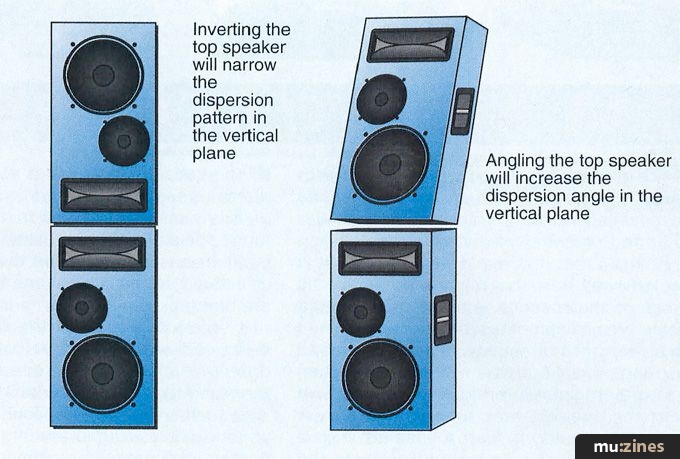
Figure 5a: Stacking for reduced vertical dispersion.
Figure 5b: Stacking for increased vertical dispersion.
In a venue with a low ceiling, it can be an advantage to narrow the vertical dispersion of your system so as to direct as little power as possible towards the ceiling. This is only possible if you are using two or more identical cabinets per side, and the high frequencies must be reproduced by means of horns. Figure 5a shows a stack of two cabinets where the top cabinet is inverted; this produces a narrowing of the vertical dispersion of the high frequency units without affecting their performance in the horizontal plane. The physical size of the two cabinets will also tend to narrow the low frequency dispersion to some extent.
In venues with high ceilings and tiered seating, it may be necessary to increase the vertical dispersion of the speakers, in which case the cabinets may be stacked as in Figure 5b, with the upper cabinet angled relative to the lower one. It is important to tilt the top cabinet so that the horns cover different areas of the audience rather than overlapping too much.
Next month I'll be looking further into the practicalities of setting up a small system, including how to avoid feedback and how to ensure you can hear your monitor mix on stage.
Series - "Live Sound"
Read the next part in this series:

All parts in this series:
Part 1 | Part 2 | Part 3 | Part 4 (Viewing) | Part 5 | Part 6
More with this topic
 Bad Gigs |
 Setting The Scene - Snapshots at the opera: in the realm of real time |
 Re: Hassle Rehearsal - Rehearsing |
 PA Column |
 Access all areas - Glastonbury sound |
 PA Column |
 Going For Broke |
Light Show |
 Overtones - Gig Tactics |
 Music On Tap |
 So You Want To Be A... - FOH Engineer |
 Say It Loud! - Power Amps and Loudspeakers |
Browse by Topic:
Live
Publisher: Recording Musician - SOS Publications Ltd.
The contents of this magazine are re-published here with the kind permission of SOS Publications Ltd.
The current copyright owner/s of this content may differ from the originally published copyright notice.
More details on copyright ownership...

Recording Musician - Feb 1993
Donated & scanned by: Mike Gorman
Feature by Paul White
Help Support The Things You Love
mu:zines is the result of thousands of hours of effort, and will require many thousands more going forward to reach our goals of getting all this content online.
If you value this resource, you can support this project - it really helps!
Donations for November 2026
Issues donated this month: 0
New issues that have been donated or scanned for us this month.
Funds donated this month: £0.00
All donations and support are gratefully appreciated - thank you.
Magazines Needed - Can You Help?
Do you have any of these magazine issues?
If so, and you can donate, lend or scan them to help complete our archive, please get in touch via the Contribute page - thanks!
Please Contribute to mu:zines by supplying magazines, scanning or donating funds. Thanks!
Monetary donations go towards site running costs, and the occasional coffee for me if there's anything left over!

 @mu_zines
 RSS Feed
 Blog