


Magazine Archive
Home -> Magazines -> Issues -> Articles in this issue -> View
Mastering For Duplication | |
Article from Recording Musician, February 1993 | |
Mike Skeet reveals everything you need to know to get your final master tape ready for mass duplication.

When you've spent many a night burning the midnight oil to perfect the recordings you're about to unleash on an unsuspecting world, why let them down at the mastering and cassette duplication stage? Take Mike Skeet's advice on preparing master tapes for trouble-free cassette duplication.
The most cost effective way to distribute your work, as most of us know, is on cassette — but there's a little more to preparing your demo for duplication than simply posting off a tape in a Jiffy bag and hoping that the copies will come back sounding like quality CDs. As well as giving your music a better chance of surviving the copying process in good shape, it also makes the duplicator's job a lot easier if the master tape is properly prepared and properly documented.
The master received by the duplicator should be 'ready to run', the peak levels of the material should be indicated and the left and right channels should be properly balanced (or any imbalance documented). There should be a clear identification of the two sides and their lengths, with sufficient spacing between sides to avoid any chance of the start of Side 2 ending up on the end of Side 1 — which happens more often than you might imagine. It all seems logical, but you'd be surprised at how many people still manage to get it wrong!
Real-Time Duplication
In real-time duplication, the master is played at normal speed into a paralleled bank of conventional cassette decks, usually loaded with 'wound to length' cassettes. Nowadays, the Production Master is undoubtedly best made on DAT, though high-quality cassette or open-reel masters are still acceptable if no DAT is available. DAT has proved a surprisingly reliable format, with few compatibility problems; in the past, digital systems such as the F1 Beta were notorious for 'drop outs', which occurred mainly because of intermachine incompatibility.
Reel-to-reel masters can cause problems in terms of unpredictable azimuth alignment; the duplicator's machine can be adjusted if the master has proper test tones recorded on it, but this still seems to be the exception rather than the rule. Questionable EQ compatibility (was the original tape machine NAB or IEC?) and tracking problems due to head height errors also make matters worse. Then there's the need to accommodate quarter-track and half-track masters, let alone the odd cases of mono. Speed accuracy is always questionable and to compound the issue, there may be either no noise reduction, or Dolby A, Dolby SR or dbx, not to mention Dolby B, C or S!
To supply a master on cassette is the least satisfactory option! Given two well-adjusted machines — the client's and the duplicator's — the chances of incompatibility on the numerous fronts are reduced, but any error would appear on each cassette duplicated. On balance, DAT is the best format, if only because such considerations as alignment, equalisation, noise reduction and speed compatibility are completely bypassed. It also doesn't matter whether the DAT was recorded at the 48KHz or 44.KHz sampling rate, as playback detection is automatic.
Loop Bin Duplication
In loop bin systems, duplication takes place at high speed, recording both 'sides' simultaneously — one side being copied forwards and the other backwards. The 'endless' Loop Bin master tape is played at high speed (32 or 64 times the normal 1 7/8 ips!) onto many slave recorders running cassette tape in pancake form, and this master has to be made regardless of which type of Production Master is supplied. Traditionally, the Loop Bin Master is initially run at either 3 3/4ips or 7 1/2ips on an analogue machine, but there is an increasing number of systems which use solid state digital storage instead of a loop bin master tape. The audio data from the store is then clocked out at a high rate and decoded into analogue form before being fed to the multiple slaves carrying the cassette tape pancakes. In either case, the tape pancakes are subsequently cut to length and wound into the final 'C Zero' shells. The comments made earlier about the suitability of DAT for the Master sent to the duplicating plant apply equally here.
Signal Levels
The audio levels which can be tolerated by a cassette system are best looked at in relation to Dolby level. Nowadays, most cassette deck metering relates Dolby Level to 0dB on its VU scale. In the past, +3dB was often used as a reference level. When duplicating by the loop bin method, the correct relationship to Dolby level must be observed, both at the loop bin master stage and during audio transfer to the slaves. How well this works in practice relies very much on the servicing standards of the duplication plant.
As a rule of thumb, the CrO2 duplication tape most commonly used by tape duplicators can readily accept peaks of +6dB relative to Dolby level — hence the attention to this subject. There is no point in the duplicator having to go through the master supplied, looking for the loudest peaks — they must have been properly controlled at the Mastering stage by the client. This is how it is done:
- At the start of the master tape, record one minute of 1KHz (approx) tone at 'Dolby Level'.
- Follow this by 15 seconds of silence.
- Next follows the side one program with the peaks no more than 6dB higher than the earlier tone. The duplicator simply sets your 1 kHz tone to produce Dolby level on his final cassettes and the peaks take care of themselves.
Peak Levels
But how do we know exactly what our peak levels really are? It is probably true to say that the best way of indicating the Peak levels for cassette duplication is the good old moving coil Peak Program Meter (PPM). The VU is Virtually Useless! (sic). The PPM's characteristics were laid down in tablets of stone in the early days of the BBC. These characteristics of Rise Time and Decay particularly suit audio transfer to analogue cassette, although they were originally formulated for broadcast transmitter feeds.
The soft compression of analogue tape allows peaks of very short duration to be handled without audible effect, the PPM's rise time allowing them to pass unobserved, though peaks sufficiently long to give audible saturation will peak the meter display. The VU meter's seriously under-read signal peaks are not to be trusted.
In the absence of a proper PPM, the use of a 3-head cassette deck with LCD or similar level metering is recommended. Simply set it up in parallel with the mastering feed to the DAT and, monitoring off tape, aim to place the peaks +6dB relative to its Dolby level indication, hopefully known to be 0dB on its scale. (I am assuming that the cassette deck is a good one, using a good tape, and demonstrably gives very good source/tape comparison, when the peaks are contained into the area +6dB reference Dolby level.) It may occur to you to use the DAT recorder's meters to judge the +6 excursions, but caution is advised; compared to a PPM, the meters on DAT recorders necessarily have a very prompt response. Experience shows that this leads you to master at a lower level than is ideal for cassette productions because of cassette's much higher noise floor, even with Dolby B. Furthermore, if the DAT recorder is a model that uses HF pre-emphasis during recording and its meters show this, it will be impossible to make any accurate judgement of peak levels.
Making The DAT Master
To move on from the steps covered earlier, use — if at all possible — a DAT machine showing Absolute Time (ABS). The reference tone of step one should be set to show around -12dB on the DAT's meters. This gives a useful headroom away from digital clipping. For machines with pre-emphasis, the headroom may need to be made a few dBs greater (by setting the initial tone at a -15dB level). Complete the second and third steps of the procedure listed above, then proceed as follows:
- Follow your side 1 material with a period of silence; three minutes is recommended, as this allows the non-loop bin duplicator time to turn over the cassettes in preparation for side 2. If side 1 is longer than side 2, a standard three-minute gap is fine — the wound-to-length cassettes would have stopped long before this.
But if side 2 is longer than side side 1, watch out! Make the gap three minutes plus the difference in timing between side 2 and side 1!
- Precede side two with 30 seconds of the reference tone.
- Follow the tone by 15 seconds of silence.
- Run side two with peaks +6dB with reference to the tone.
- Follow by silence sufficiently long to allow the cassettes to stop. The above is specifically for Real Time duplication but would equally suit Loop Bin operations. Notes on the above should be included on the DAT inlay card listings for guidance.
Labelling The DAT
Make it easy for the duplicator (he has hundreds of similar-looking DAT Masters) by labelling the DAT tape with, at least, the program title and your name or label identification. The DAT box inlays should include full details, and if it's a one-off job, your address on the card would be a great help; there should be a clear listing of whereabouts on the DAT the two album sides are to be found.
The DAT Absolute Times are shown in hours, minutes and seconds; ideally, you should place IDs at the start and finish of the sections, but in the writer's experience it is not always reliable to place and maintain these during the compilation of the master, especially if a lot of stopping and starting, rewinding and checking is done. It is probably best to do it all after the mastering is completed. For instance, IDs 1 and 2 could be placed at the start and end of the side 1 tone, with IDs 3 and 4 for the side 1 tone. Flexibility is possible here, and different duplicators may have their recommendations, but the ABS listing remains as the final guide.
Additionally, the inlay cards should carry details of the cassettes required for duplication: CrO2 or Ferric, 70uS or 120uS, Dolby or non Dolby, shells with record lugs in or out. Usually 70uS is associated with CrO2 but some duplicators can correctly operate with CrO2 at 120uS.
The Duplicator And Your Master
In the case of real time duplication, the ABS timing for the longest side will be used to determine the length of tape that needs to be used to do the job. Playback of your initial reference tone allows the setting of channel balance and level to Dolby level on the decks; ideally this would be verified using a full-track 185 nW/m2 test tape. Hence your carefully-mastered peaks will be in the +6dB area. When the minute tone ceases, the decks are all started in record mode, and 15 seconds later, side 1 duplication commences, well clear of the leader and any initial 'roughness' in the wind. In many real time setups, this would be followed by off-tape monitoring switched around all the machines, off tape with reference to the source. This may also happen near the end of the side using your written out timings.
The silence on your master between side 1 and side 2 allows all the cassettes to reach the end and be turned over. Side 2 duplication proceeds at the end of its reference tone sequence in a similar way. In the case of Loop Bin duplication, the Loop Bin Master is made up with your tones being related to Dolby Level all the way through to the final cassettes.
Though this degree of preparation may seem tedious, it is far preferable to receiving sub-standard copies, and if the correct details have not been supplied to the duplicator, he's unlikely to accept responsibility for any problems.
Dolby Level
The Master Tape Book
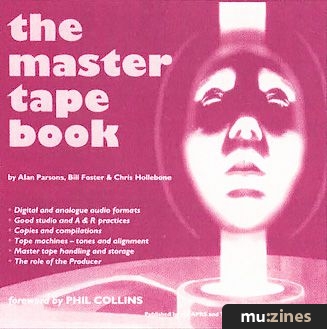
If you'd like to know more about the important subject of mastering. The Master Tape Book, published by the APRS, is just about as authoritative a source as you could hope to find, offering detailed information on tape formats, the various tape recording characteristics, tape speeds and widths, digital tape formats, tones and alignment, the correct way to make tape copies, with explanations of tape dropout and channel imbalance, and labelling conventions and advice. Also covered are tape handling and storage, amongst other topics, and the book features interesting general notes sections and a comprehensive glossary. Written by Alan Parsons, Bill Foster and Chris Hollebone, the book also has an introduction by Phil Collins!
The Master Tope Book costs £15 plus £1.50 (UK) or £2.50 (overseas) postage. It's available from The RM Bookshop, (Contact Details).
Cassette Duplication Services
ACCURATE SOUND LTD, (Contact Details).
BACKYARD STUDIO, (Contact Details).
COPYTIME. (Contact Details).
DOWNSOFT LTD, (Contact Details).
EAST LONDON CASSETTE COPYING. (Contact Details).
GWBB AUDIOVISION, (Contact Details).
KEYNOTE CASSETTES, (Contact Details).
MIRROR CASSETTES, (Contact Details).
OCTAGON RECORDS & TAPES, (Contact Details).
PANTON MUSIC. (Contact Details).
RMS STUDIOS, (Contact Details).
RTS LTD, (Contact Details).
REAL RECORDINGS LTD, (Contact Details).
SELECTA SOUND, (Contact Details).
SPOOL DUPLICATION, (Contact Details).
SOUNDS GOOD, (Contact Details).
STUDIO TEC. (Contact Details).
TAM STUDIOS, (Contact Details).
TAPELINE, (Contact Details).
TAPESTREAM. (Contact Details).
WNE, (Contact Details).
CASSETTE LABELS & INSERTS, (Contact Details).
More with this topic
 Masters Of The Universe |
 DIY Music - All You Need To Know About Making Your Own Records |
 Strawberry Cutting Room |
 Mastering at Home |
 Past Masters - Sound Mastering |
 Making Records (Part 1) |
 Cut It Out |
Browse by Topic:
Mastering
Publisher: Recording Musician - SOS Publications Ltd.
The contents of this magazine are re-published here with the kind permission of SOS Publications Ltd.
The current copyright owner/s of this content may differ from the originally published copyright notice.
More details on copyright ownership...

Recording Musician - Feb 1993
Donated & scanned by: Mike Gorman
Feature by Mike Skeet
Help Support The Things You Love
mu:zines is the result of thousands of hours of effort, and will require many thousands more going forward to reach our goals of getting all this content online.
If you value this resource, you can support this project - it really helps!
Donations for April 2026
Issues donated this month: 0
New issues that have been donated or scanned for us this month.
Funds donated this month: £0.00
All donations and support are gratefully appreciated - thank you.
Magazines Needed - Can You Help?
Do you have any of these magazine issues?
If so, and you can donate, lend or scan them to help complete our archive, please get in touch via the Contribute page - thanks!
Please Contribute to mu:zines by supplying magazines, scanning or donating funds. Thanks!
Monetary donations go towards site running costs, and the occasional coffee for me if there's anything left over!

 @mu_zines
 RSS Feed
 Blog
Blog