


Magazine Archive
Home -> Magazines -> Issues -> Articles in this issue -> View
Echo and U Turns | |
Echo And The BunnymenArticle from International Musician & Recording World, January 1986 | |
Mac and the men tell Chris Maillard why their new album will have no strings attached
The men have been replaced by machines, their sounds by samples. Are these still the Bunnies we used to know?
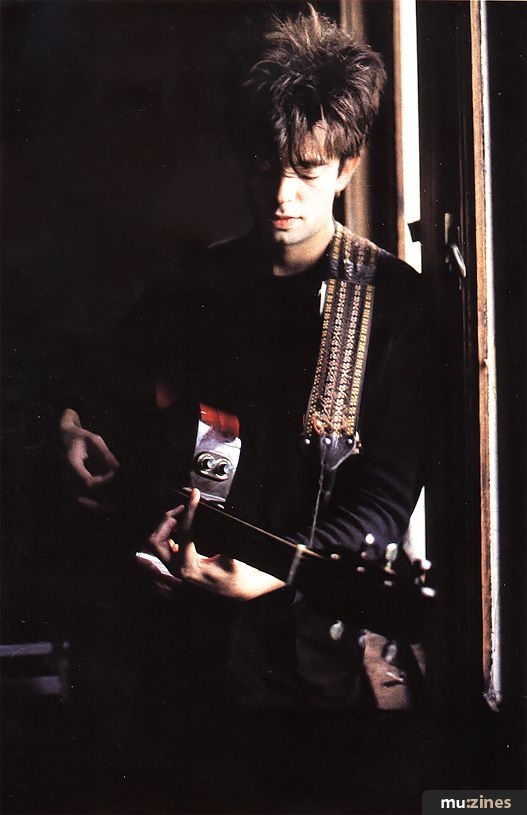
Image credit: Joe Bangay
"Look, for the last time," spits big Mac, "it doesn't fookin' matter, right?"
I agreed. There's not a lot else you can do when six-foot plus of aggrieved Scouser is getting his dark glasses steamed up about the ethics of musicianship.
Of course, he did have a point; one which the band he leads, Echo and the Bunnymen, have recently made even more forcefully by the means of a successful single and one which they'll reinforce when their next proper LP follows the just-released greatest hits package into the top end of the charts.
Mac, or Ian McCulloch as he's known less familiarly, was talking about the topic near to every band's heart at the moment; to sample or not to sample.
The Bunnymen have recently made something of an about-face in the direction of their artistic endeavours. Last time they collected in a recording studio for an album it was the well-respected but distinctly non-Fairlight Studio Des Dames, Paris. The album that came from those sessions was the string-driven and grandiose Ocean Rain, a reasonable success but no Thriller.
And when they talked about the making of that album, the four Scousers chatted enthusiastically about the unbeatable sound of real strings, the rawness and excitement of live playing, and the gritty but real sound of the studio, which boasted an impressive selection of valve devices which most top SSL studios would years ago have consigned to the spares bin. But that, as they say, was then.
Now, however, they have abruptly changed tack and unleashed a single — Bring On The Dancing Horses — which uses all those tricks and techniques that are at the service of the modern Pop producer. Their man at the mixer was very definitely of that ilk — Laurie Latham is best known for his work with the Smokey Robinson of the wine-bar set, Paul Young.
They went abroad again, to Brussels, because like all good superstar producers, Laurie Latham is a tax exile. He demonstrated why he's earned that dubious honour, though, by building a sound not too far removed from the classic hypnotic Bunnymen style yet sleek enough to make it slide seamlessly onto the Pop radio's format-obsessed playlists.
"Skin Deep," explains Mac cryptically. "Err... no, what I meant to say was that I liked Skin Deep by the Stranglers. And Laurie Latham had produced that. That was really why we chose him. And Brussels, as well. That's where he works and it was good going there; like a holiday.
"The studio was good, too. Although we didn't like the recreation area..."
"A lot of the guitar is Emulator" Will Sergeant
"The seats weren't very comfy," chips in guitarist Will Sergeant helpfully.
"But one good thing was," continues Mac undeterred, "Laurie made the studio people put a window in by the desk, right in front of the control room so you could see daylight, tell what time of day it was. That was nice."
But what about the music? What about the single?
"A lot of the guitar..." says Will, "is Emulator. Lots of stuff that we sampled and played back off a sequencer. There's a bit of Rickenbacker 12-string on it here and there, though, and Mac played a couple of offbeat chords, just sort of accent things. And there's chords with vibrato underneath the main stuff."
"I didn't play bass at all on it" Les Pattinson
"And I didn't play bass at all on it," confesses Les Pattinson cheerfully. "I just played a line once, just a riff, and we sampled it onto the AMS and Laurie punched it in where it was needed. It made it really precise, dead tight."
"The drums weren't me either," erstwhile drummer Pete DeFreitas contributes, a little less cheerfully. "The main rhythm pattern was a LinnDrum, and I just played rolls over the top. When I say it was the Linn, though, we sampled my sounds into the AMS and then triggered them from the Linn. It took ages, as well — you get all set up and patch in the AMS then you link itto the Linn and then the AMS breaks down... I don't know why we bothered."
"I sang all the way through," affirms Mac. "Mind you, he even patched things upon that. If you don't get a line right on one chorus, say, and you've got it right before, you know you can go back to the other one, sample it and then punch it in. It's quite reassuring, in a way."
But don't you feel a little redundant, with the Linn, AMS and Emulator duplicating the Bunnymen while you sit on the uncomfortable chairs in the recreation area? Les?
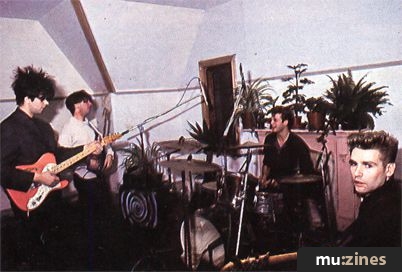
Image credit: Joe Bangay
"Nah, I don't think so. I was into it. And anyway the AMS kept freaking out so that made us feel a bit better.
"If you come up with the part, it's your part and your sound, it might as well be you but perfect. Perfectly in time and everything. That was why we did it, really. After all, in 10 years time you don't want to listen back to the song and think 'it would have been better if it had been played in time.' This way we can get it all just right. And you can change the pace of it, change it up or down by changing the speed it's triggered at. It's just like someone having a good day or a bad day except you can guarantee a good one."
"There are some tracks you couldn't do that for, though," opines Will. "Some things you'd lose all the feel, lose the excitement. It just happened that Bring On The Dancing Horses was the sort of track where it really worked. It needed that monotonous, hypnotic feel."
"The drums weren't me either" Pete DeFreitas
A change of tack, surely?
"No, not really," mutters Mac.
"There's some Emulator on Killing Moon, not the main string line but a thing underneath to give it more depth. And when Horses was written it had synthesizer on it anyway. We just wanted to try out all this new stuff, see what it was like."
"We like New Order and stuff anyway," butts in Will again, "so it's not as though we've never considered it before. We did it a bit on Never Stop and a bit of synth on Over The Wall but not much. Those things always sound good on dance records..."
"But it's not a dance record," disagrees Mac. "It should have been faster, I think. It's not as exciting as it could have been. And I don't think I sung it as well as I could have done."
This doesn't sound like the usual 'our-last-record-is-the-best-thing-in-the-world-except-our-next-one' promotional scam. Or is it just that Echo and the Bunnymen are never satisfied?
"Oh no," Mac hastens to disagree, "somethings I've been pleased with. Killing Moon was close. Some parts of Ocean Rain, the second side, I really like. Angels and Devils, Back Of Love... Ocean Rain, come to think of it, I really like the first side too. And the edges. And the hole in the middle. And that fact that it's black all over..."
So what about the next one?
"We don't know," Will says confidently. "We've not finished writing the songs for it yet. We've got half of it. Which is better than not having any of it.
"I sang all the way through" Ian McCulloch
"The thing is we write together — just go into this rehearsal room we use in Liverpool and come up with ideas. They've got a great tape recorder there, so if we come up with a great idea we can just say to them 'put the mikes up' and we'll record it. The problem is, we haven't been able to get together and write all that much lately because we haven't had time. But the last time we did we came up with loads of stuff, so it's looking quite hopeful."
"When we get down to it we write really fast," explains Mac. "The B sides of the single, both of them on the 12-inch, we wrote in about half an hour each.
"You see it's been about 18 months since we wrote a song, really. We had a break after the Ocean Rain tour which was intended to be a year off. But it didn't really last that long."
The end of the Bunnies' year-long vacation in fact came after about half that time when they bashed into shape a set composed largely of coverversions (including Television, Doors, Stones and Dylan classics) and toured tiny places in Scandinavia. They learnt from the experience, as well, it seems.
"It's funny playing a lot of the songs that you like," muses Mac, "because you think they're really complicated and you start to work them out and you find they're a dead simple riff and just the way it's played makes it interesting. Like, for instance, you can get a good riff that's just on E, stick a few little frills in and get a good groove and you can go to A for the chorus and it sounds great. If you do it right."
"It's changed our writing," says Will, "because we used to think you couldn't use straightforward chords, you had to stick some piddling complicated bit over it. You can just use the chords, use them straight and they sound good...
"It's like just A minor in the verse and the chorus goes G, A minor. Instead of shying away from things like that, use them because they sound good. And exciting."
So the next album's going to be more direct, less complicated and more exciting. But are the Bunnymen going to play on any of it? Mac?
"Look for the last time, it doesn't fookin' matter, right?"
Right.
Mac's Track — The Vocal Sound
"Oh, alright. I'm lying, although I do use a Shure live. In the studio I use one of the big Neumann ones, although I did use a Telefunken valve mike on something we did the other week... I'm not that keen on it, though.
"I used to use AKG 414s, I used to like them because they used to have them at the Peel sessions and they're really bright. But now I've gone off that. It's okay for some songs.
"Sometimes I'll use a combination of mikes — I don't care that much although I know when it's sounding good, or when it's too honky.
"Usually it's Sennheisers, the big ones with the triangular tops that they put in big spring cradles. I like them.
"I like a lot of reverb, loads more than most people. We've just bought one of those Great British Spring ones for rehearsals, they're really cheap but they've got ever so much depth to them. They're really good value at £200 and it does all that stereo business as well.
"I sing close to the mike — usually about eight inches or so but I tend to get closer when I get into it anyway. Laurie wanted me to get as close as possible, really right up to the mike with one of those pop shields that are just a stocking stretched over a coathanger.
"It's better for me to sing close up, particularly when I do low, half-spoken vocals, because I can hear myself better and I feel much more at ease that way. I tend to sing with my eyes closed though... I end up singing all over the place. Close up, far off, off to the side, anywhere.
"There's one thing I think is more important than anything else about my vocal sound, mind you. It's my voice."
More with this artist
 Echo-Plex (Echo And The Bunnymen) |
Publisher: International Musician & Recording World - Cover Publications Ltd, Northern & Shell Ltd.
The current copyright owner/s of this content may differ from the originally published copyright notice.
More details on copyright ownership...

International Musician - Jan 1986
Interview by Chris Maillard
Help Support The Things You Love
mu:zines is the result of thousands of hours of effort, and will require many thousands more going forward to reach our goals of getting all this content online.
If you value this resource, you can support this project - it really helps!
Donations for April 2026
Issues donated this month: 0
New issues that have been donated or scanned for us this month.
Funds donated this month: £0.00
All donations and support are gratefully appreciated - thank you.
Magazines Needed - Can You Help?
Do you have any of these magazine issues?
If so, and you can donate, lend or scan them to help complete our archive, please get in touch via the Contribute page - thanks!
Please Contribute to mu:zines by supplying magazines, scanning or donating funds. Thanks!
Monetary donations go towards site running costs, and the occasional coffee for me if there's anything left over!

 @mu_zines
 RSS Feed
 Blog
Blog